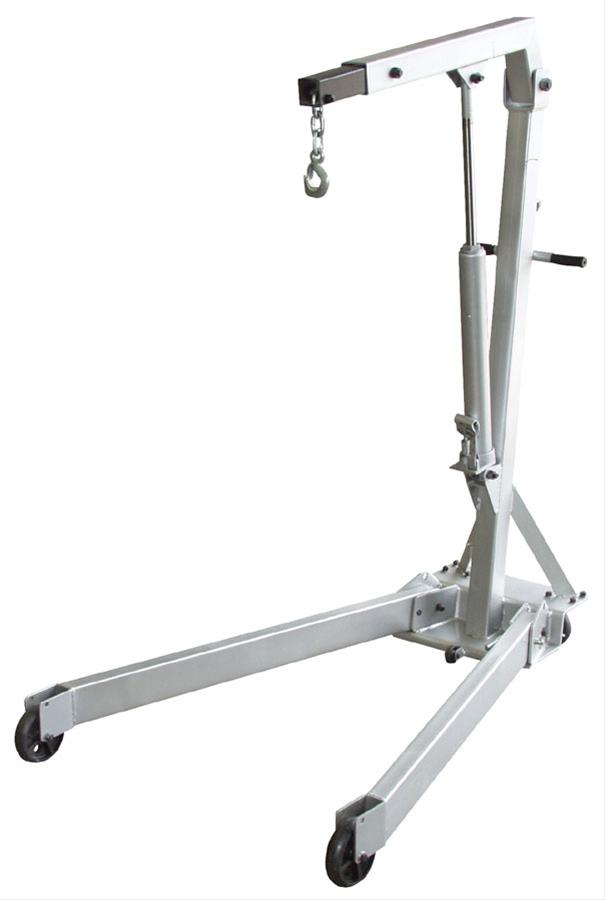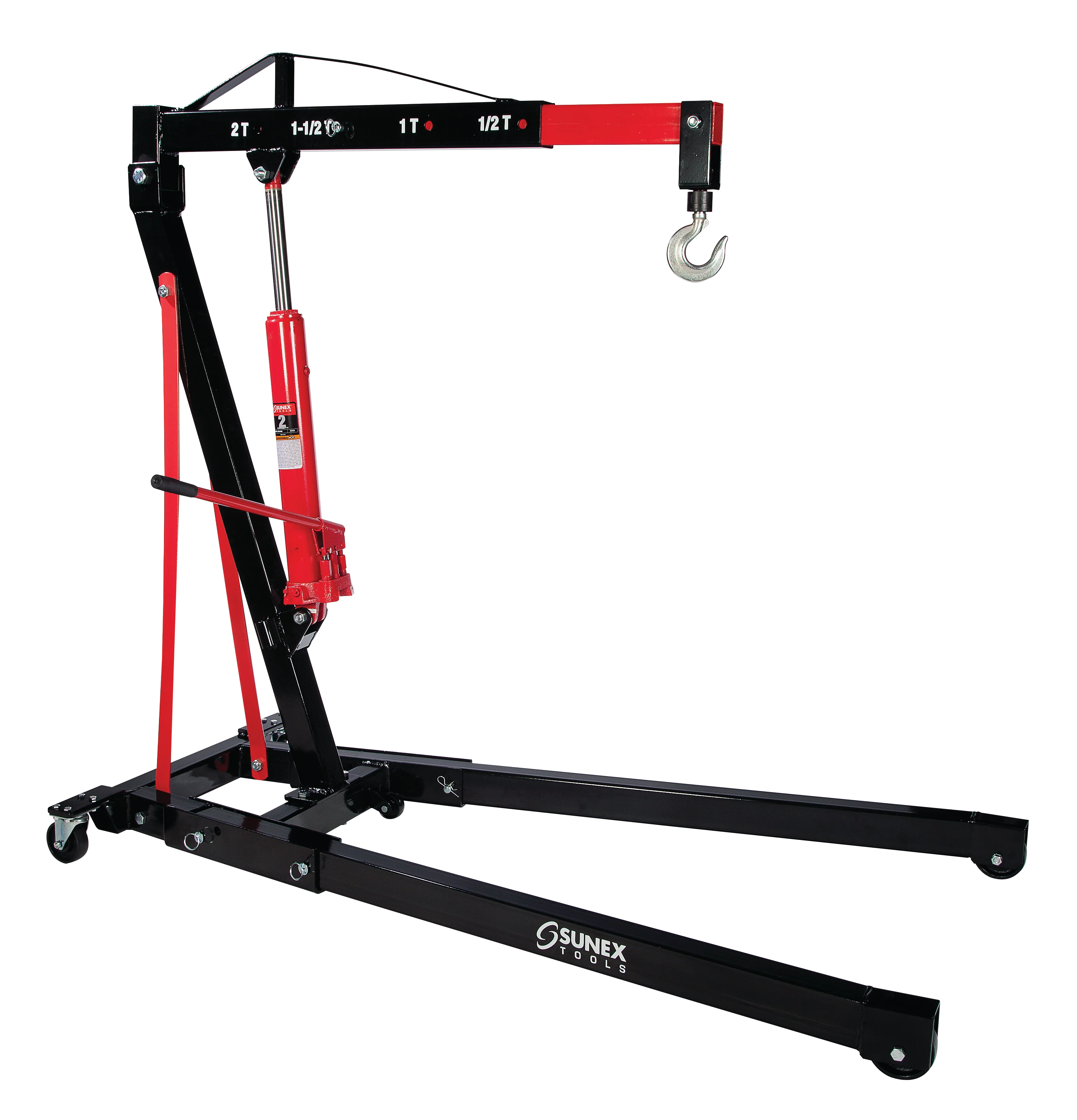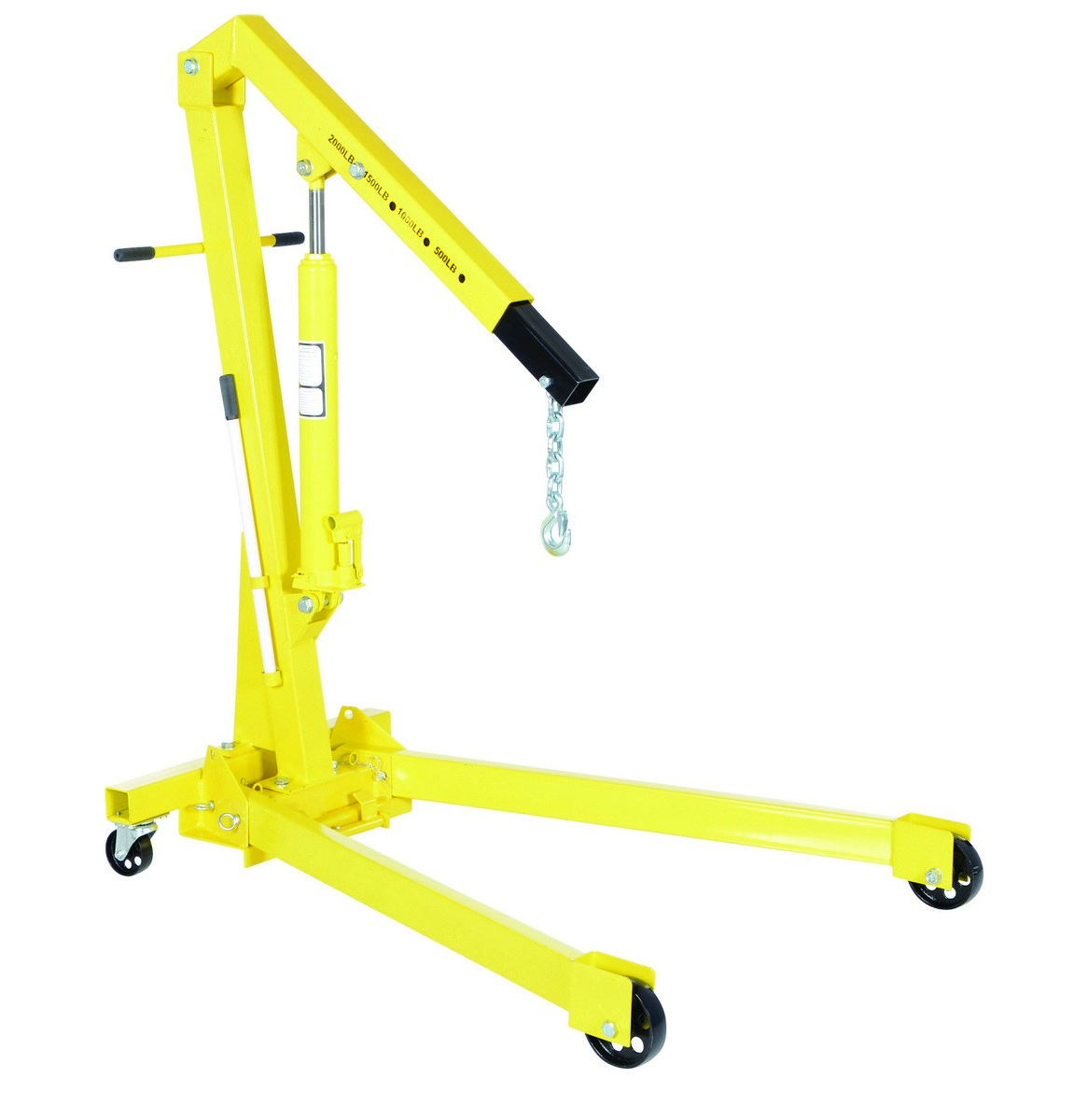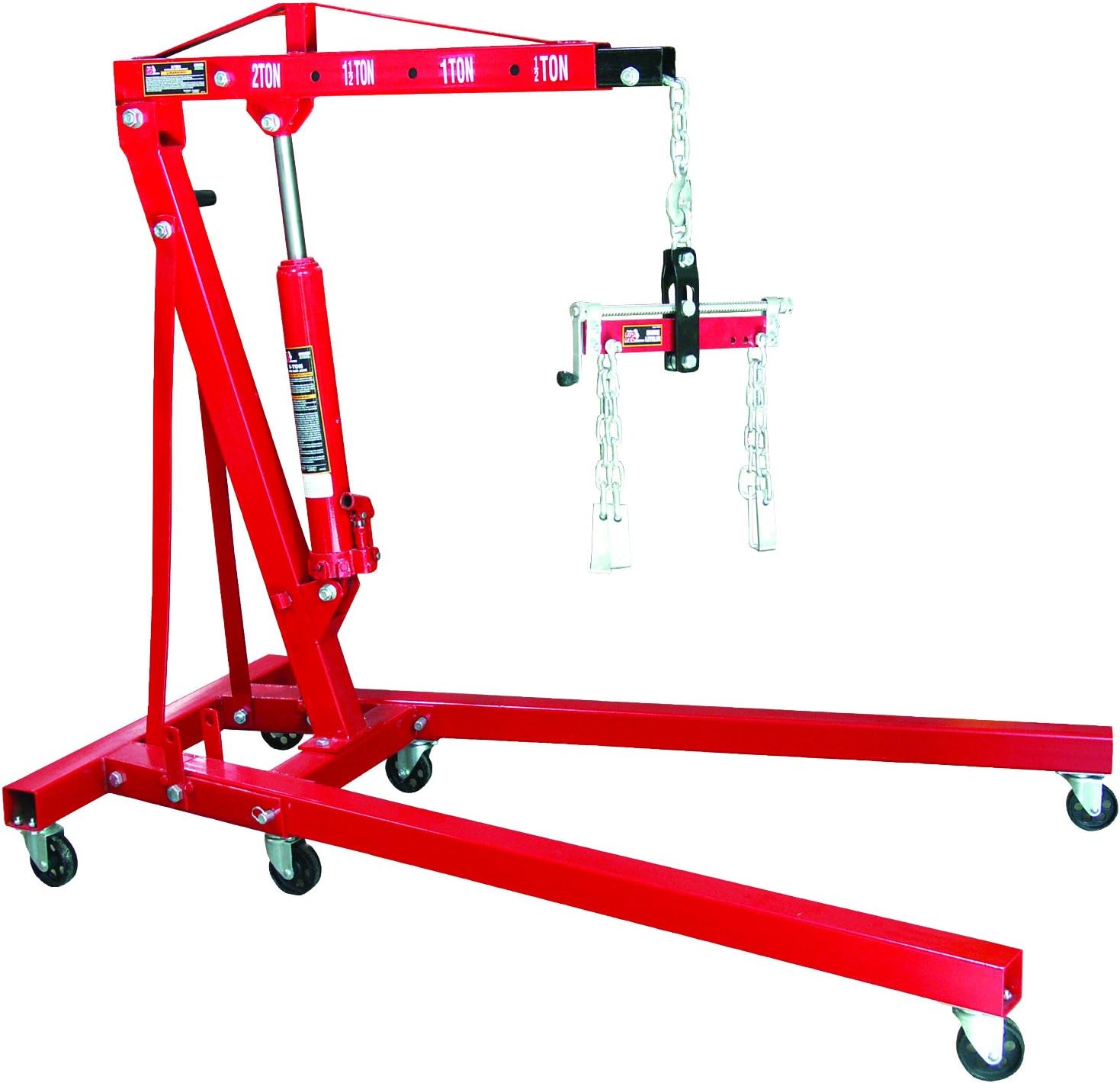
Torin Big Red BRT32002 2-Ton Folding Engine Hoist
The go-to cherry picker for engine swaps. Folds flat in 60 seconds.
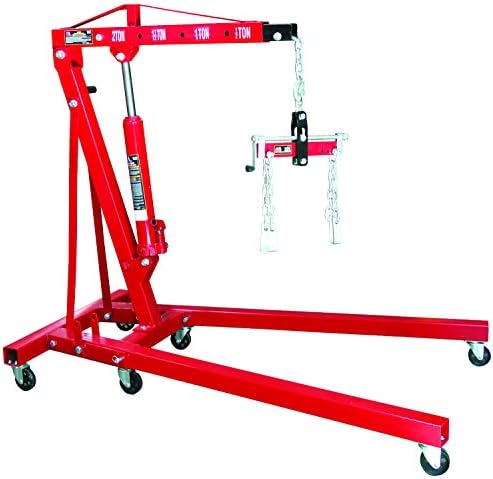
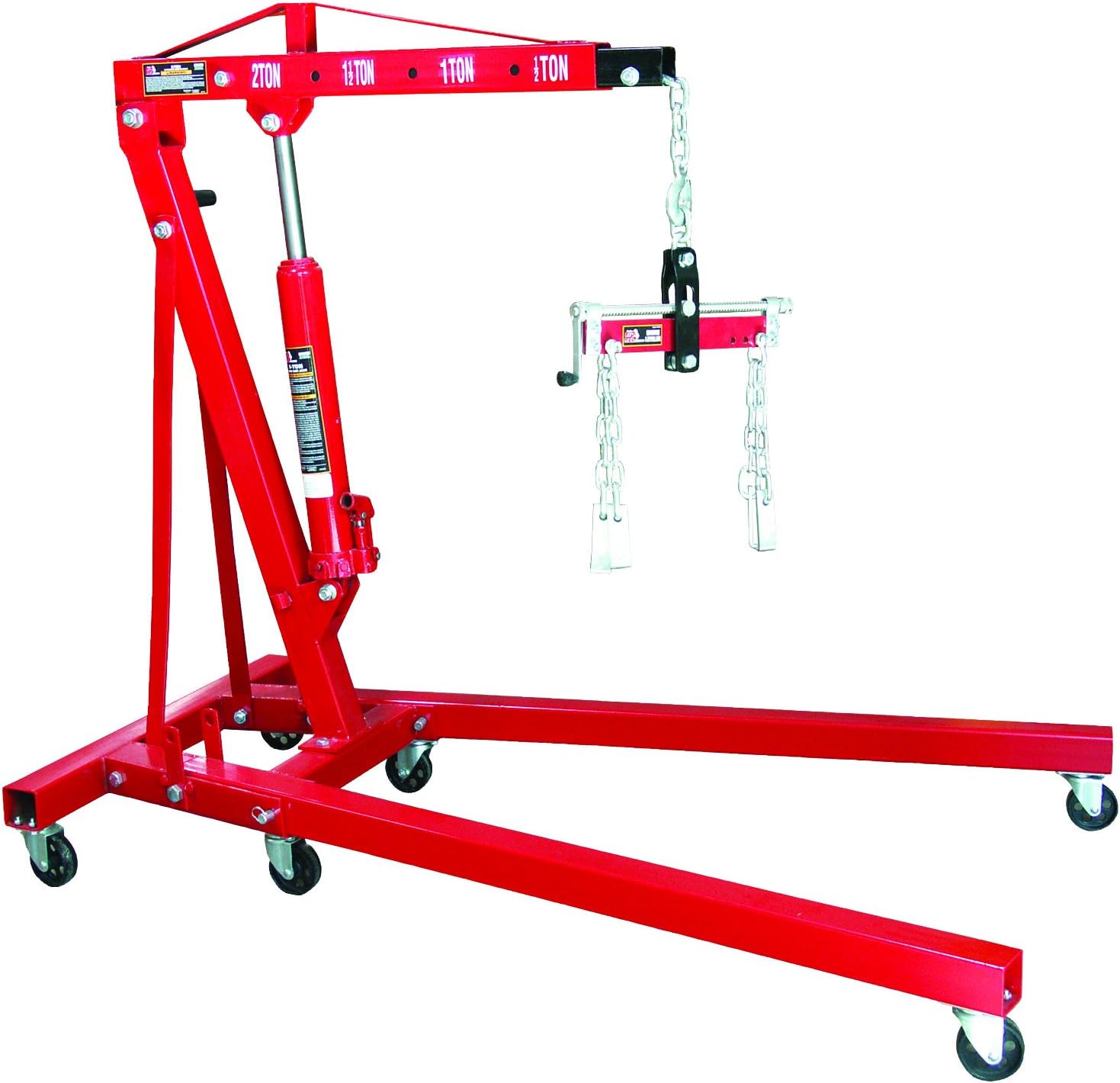
2-ton (4,000 lb) folding engine hoist. 6-position boom 36–60 inches, precision release valve, 360° swivel casters, folds to under 12 inches for storage.
- 2-ton (4,000 lb) capacity at shortest boom position
- 6-position adjustable boom: 36 to 60 inches
- Precision single-action release valve — no sudden drops
- Folds flat to under 12 inches deep for storage
- 360° swivel casters (two locking) — polyurethane, floor-safe
- Hydraulic cylinder rated 150% above working load limit
- Rated chain with swivel safety hooks included
- Heavy-gauge steel frame — powder-coated for corrosion resistance
✓ In Stock — Ships in 5-10 business days
Request a Quote
We respond within 24 hours — pricing, availability & shipping included
Quote Request Received
Thanks! We'll get back to you within 24 hours with pricing, availability, and shipping details for the Torin Big Red BRT32002 2-Ton Folding Engine Hoist.
| Model | BRT32002 |
| Casters | 4 × 360° swivel polyurethane, 2 locking |
| Lift Height | 7.5 in (min) to 70 in (max) |
| Unit Weight | 101 lbs (45.8 kg) |
| Manufacturer | Torin (Big Red) |
| Boom Positions | 6 — from 36 to 60 inches |
| Certifications | ASME PALD-2009, CE |
| Chain Included | Yes — rated chain with swivel safety hooks |
| Frame Material | Heavy-gauge steel, powder-coated |
| Hydraulic Type | Single-beam hydraulic ram with precision release valve |
| Rated Capacity | 2 ton (4,000 lbs) at min boom / 1,000 lbs at max boom |
| Collapsed Depth | Under 12 inches |
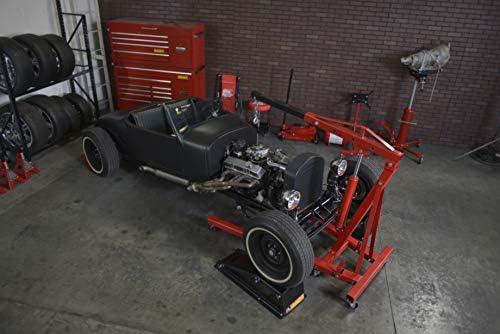
Multi-angle views of the Torin Big Red BRT32002 2-Ton Folding Engine Hoist. Click any image to zoom.
Watch the Torin Big Red BRT32002 2-Ton Folding Engine Hoist in action — full installation and operation demo.
Engine hoists (cherry pickers) use a foot-pedal or hand-pump hydraulic cylinder to raise a chain-hung load from the boom hook. The 6-position adjustable boom lets you set the reach before lifting — shorter for higher capacity, longer for reaching over fenders.
🔧 Boom Position Selection
Select the boom position before lifting. Shorter boom settings provide higher lifting capacity; longer settings reduce capacity proportionally. Verify your engine's total weight (engine + accessories + brackets) against the capacity chart on the boom before attaching the chain.
⬆️ Hydraulic Pump
Foot-pedal or hand pump builds hydraulic pressure to raise the cylinder. Pump in smooth, even strokes. The cylinder rises and lifts the chain load. Stop pumping at your working height — the pressure holds.
⬇️ Precision Release Valve
The release valve controls descent speed. Open slightly for controlled, slow lowering. For engine installation (lowering an engine onto mounts), half-turn increments on the release valve provide inch-per-second descent — precise enough to align engine mounts without a second person.
🔗 Load Leveler Operation
If your hoist includes a load leveler, attach it between the hoist hook and the engine lifting bracket. Turn the adjustment wheel to tilt the engine nose-up or nose-down while airborne. Set the angle before lowering into the engine bay — it's much harder to adjust under load once the engine is partially installed.
⚙️ ASME PALD-2009 Compliance
All shop cranes and engine hoists must comply with ASME PALD-2009 (Portable Automotive Lifting Devices) standard, which specifies minimum capacity ratings, safety factors, test loads, and marking requirements. Look for the ASME PALD marking on the boom's capacity chart decal — it confirms the capacity ratings have been independently verified.
🔗 Rated Chain & Hook Inspection
Inspect the lifting chain and safety hooks before every use. Replace any chain link showing visible deformation, cracking, stretching, or corrosion pitting. The chain should be rated to at least the hoist's maximum capacity. Safety hooks must latch fully closed — a hook with a broken latch is immediately unsafe and must be replaced before use.
⚠️ Capacity Chart Compliance
Never exceed the capacity listed on the boom position decal for your current boom setting. Capacity decreases as the boom extends — typically 2,000 lbs at minimum extension drops to 500–1,000 lbs at maximum extension. Weigh your engine package (engine + transmission if combined) before attaching the chain. Exceeding rated capacity causes hydraulic seal failure and sudden load drop.
🛡️ Load Leveler Safety
When using a load leveler, ensure the attachment points on the engine lifting bracket are rated for the engine's weight at the angle being used. Angled loads create higher forces on the attachment hardware than vertical loads. Never exceed the load leveler's rated capacity, which may be lower than the hoist's own rated capacity — always use the lower of the two ratings.
How does this compare?
The BRT32002 vs. the floor-crane alternatives: folding design is the reason this outsells fixed-leg hoists 4-to-1 in shops under 1,500 sq ft. Fixed-leg hoists stay up all the time — they get in the way. The BRT32002 stores in a 12-inch footprint. The 6-position boom is key for short-nose engines (Subaru, Toyota inline-4) and long-nose V8s — you need different boom lengths for different engine positions. For routine 4-cylinder pulls, you'll never exceed the 1,500 lb range; for big-block V8s with accessories, verify your total weight before using the long boom setting.
No reviews yet
Be the first to share your experience with this product.
You Might Also Like