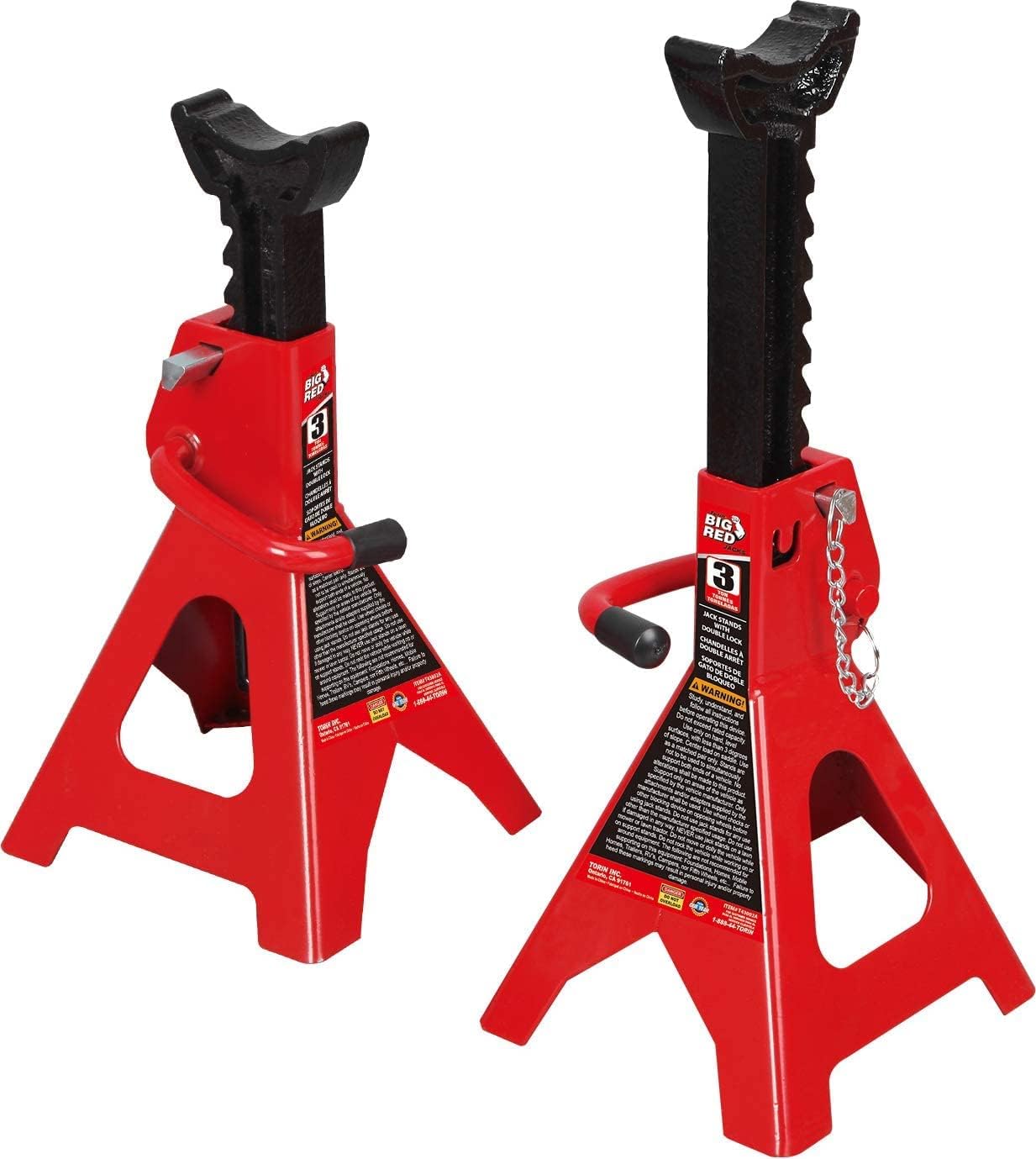
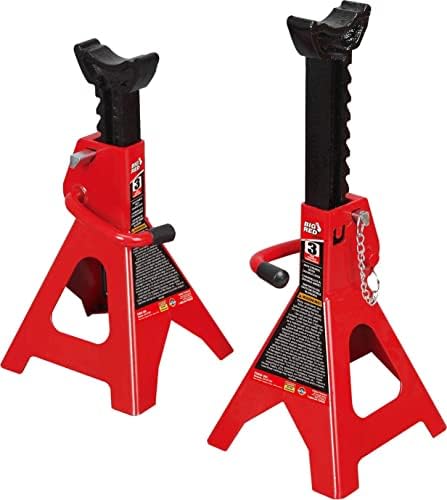
Torin Big Red TAM-6409T 3-Ton Jack Stands (Pair)
Never work under a car on a jack alone. Ever. These are the insurance.
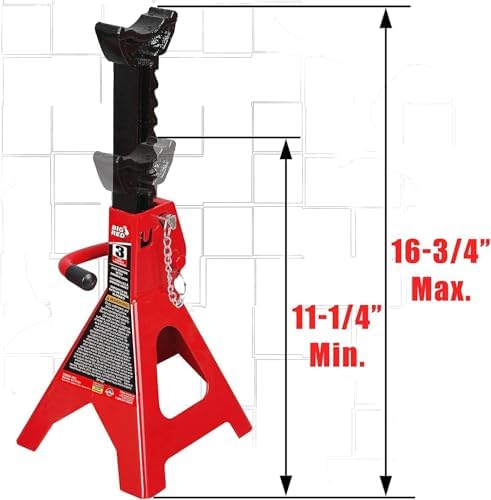
3-ton jack stands (pair). 6,000 lb each, 11.75 to 17.75 inches height (11 positions), double-lock ratchet, wide-base tripod, rubber saddle. The safety equipment that makes jack work safe.
- 3-ton (6,000 lb) rated capacity each
- 11 height positions: 11.75 to 17.75 inches
- Double-lock ratchet — requires positive release, no accidental drops
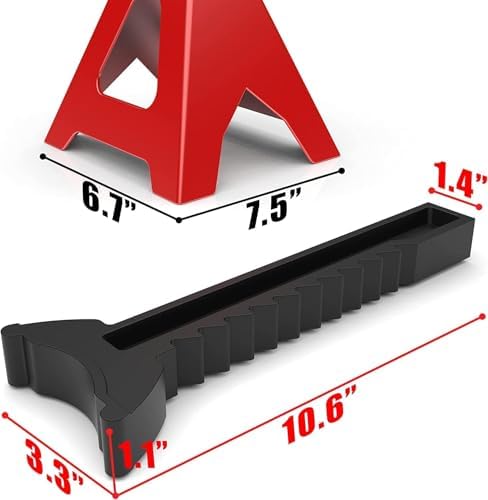
- 11.5-inch diagonal tripod base spread
- Flared safety feet — stable on gravel and dirt
- Rubber saddle — protects pinch welds and paint
- Sold as a pair — matched set
- Heavy-gauge stamped steel construction
✓ In Stock — Ships in 5-10 business days
Request a Quote
We respond within 24 hours — pricing, availability & shipping included
Quote Request Received
Thanks! We'll get back to you within 24 hours with pricing, availability, and shipping details for the Torin Big Red TAM-6409T 3-Ton Jack Stands (Pair).
| Frame | Heavy-gauge stamped steel |
| Model | TAM-6409T |
| Saddle | Rubber protective saddle |
| Sold As | Pair (2 stands) |
| Base Spread | 11.5 inches diagonal |
| Manufacturer | Torin (Big Red) |
| Stand Weight | 6.5 lbs each (13 lbs/pair) |
| Certifications | ASME PALD-2009 |
| Rated Capacity | 3 ton (6,000 lbs) per stand |
| Height Increment | 0.5 inches per position |
| Height Positions | 11 positions — 11.75 to 17.75 inches |
| Locking Mechanism | Double-lock ratchet |
Multi-angle views of the Torin Big Red TAM-6409T 3-Ton Jack Stands (Pair). Click any image to zoom.
Watch the Torin Big Red TAM-6409T 3-Ton Jack Stands (Pair) in action — full installation and operation demo.
Floor jacks use a hydraulic pump to raise a saddle under a vehicle's jack point. Bottle jacks stand vertically under axles and frame rails. Jack stands are the non-negotiable safety step — never work under a vehicle supported only by a hydraulic jack.
🚗 Finding the Jack Point
Consult your vehicle's owner manual for recommended jack points — typically reinforced steel jack pads behind the front wheels and in front of the rear wheels along the rocker panel. On unibody vehicles, only lift at designated pinch-weld pads. On frame-rail trucks, you can jack anywhere along the frame. Using a floor jack at the wrong point crushes plastic undertray and rocker panel trim.
⬆️ Pumping to Height
Close the release valve fully (turn clockwise) before pumping. Pump the handle in full strokes — partial strokes build pressure slowly and strain the pump. Most modern floor jacks reach full height in 8–15 strokes. Stop pumping when the vehicle weight transfers onto the saddle (you'll feel the resistance increase). Do not pump beyond the jack's maximum height — the bypass valve will limit it, but repeated over-pumping wears seals.
🔩 Setting Jack Stands
Once the vehicle is at working height, immediately position jack stands under solid structural points (frame rails, axle housing, or designated stand pads). Lower the vehicle slowly onto the stands — do not leave the vehicle suspended on the floor jack for work. Confirm each stand is on level, firm ground and the vehicle's weight has fully transferred before ducking underneath.
⬇️ Controlled Lowering
Turn the release valve counterclockwise — slowly, in small increments. The saddle lowers at a rate proportional to how far you open the valve. For lowering an engine back onto mounts or positioning a vehicle precisely, use quarter-turn increments. Never fully open the release valve — it causes the saddle to drop rapidly and can damage the vehicle or destabilize the jack.
⚙️ ASME PALD Hydraulic Safety
Floor jacks must meet ASME PALD-2009 standards for portable automotive lifting devices. This requires a minimum 150% safety factor on the hydraulic cylinder and internal bypass valve to prevent over-pressurization. The bypass valve is the passive safety that stops the pump from building pressure beyond the rated maximum — it does not prevent overloading the jack by placing too much weight on the saddle.
🔒 Jack Stand Non-Negotiable Rule
OSHA 29 CFR 1910.179 and every automotive safety standard prohibit working under a vehicle supported only by a hydraulic jack. Floor jacks and bottle jacks are lifting devices — not supporting devices. A hydraulic jack can fail from seal wear, contaminated fluid, or slow internal leakage. Jack stands are mechanical and cannot "leak down." Place jack stands under solid structural points whenever performing any work under the vehicle.
⚠️ Overload & Bypass Valve
Do not attempt to lift loads exceeding the jack's rated capacity. Overloading causes catastrophic hydraulic seal failure — the cylinder can rupture or the saddle can drop suddenly. If the pump handle feels unusually hard to stroke, the load likely exceeds capacity. Check the vehicle's jacking load (typically 40-60% of the vehicle's weight at any single jack point) against the jack's rated capacity before lifting.
🛡️ Bottle Jack Stability
Bottle jacks have a small base footprint — they can tip under eccentric (off-center) loads. Always position the bottle jack saddle directly under the vehicle's center of gravity for that axle. Use a rubber saddle pad between the jack and the vehicle frame to prevent slipping. On dirt or gravel, place the bottle jack on a steel base plate to prevent sinking. Never use a bottle jack on any surface that cannot support the full vehicle weight at the jack's base footprint.
How does this compare?
Jack stands: the non-negotiable. No debate here. If you're doing brake work, suspension work, exhaust work, or any task that requires being under the car for more than the 30 seconds it takes to look at something — get the vehicle on stands. 3-ton (6,000 lb per stand) handles any passenger vehicle and most light trucks. For heavy-duty trucks and SUVs (F-250+, Suburban/Tahoe), step up to the TAM-6412T 6-ton stands. For motorsports and low-car work, look for the lower-profile 2-ton stands that set up at 10 inches minimum height.
No reviews yet
Be the first to share your experience with this product.
You Might Also Like