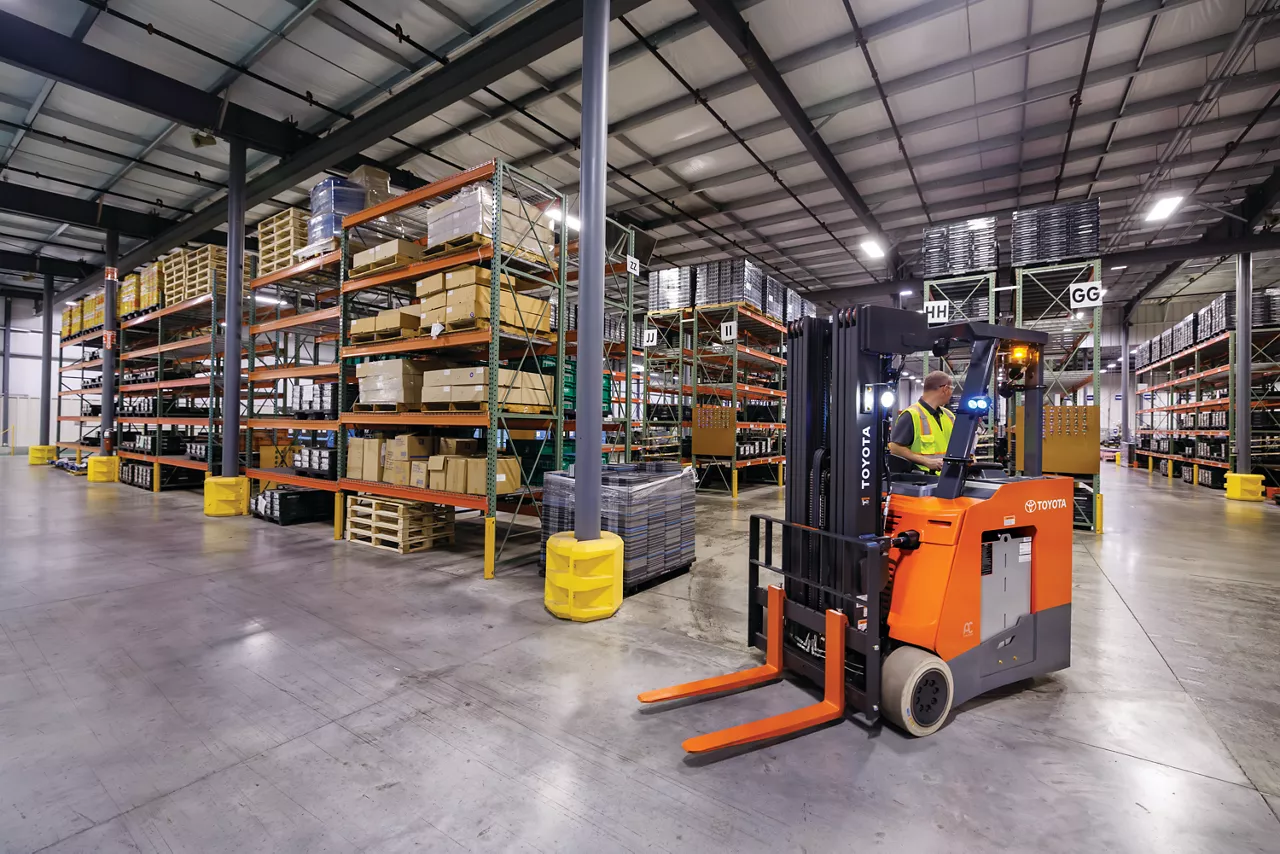
IronReach 3500 Narrow-Aisle Electric Reach Truck
High racks, tight aisles, zero compromise. 3,500 lb reach truck goes where counterbalance forklifts can't.
3,500 lb stand-up electric reach truck. 300-inch (25 ft) lift height, 48V AC drive, extending mast reach for aisles under 8 feet wide. 8+ hour runtime per shift.
- 3,500 lb rated lift capacity at 24-inch load center
- 300-inch (25 ft) maximum lift height — 4-stage full free lift mast
- Extending reach mechanism — accesses double-deep racking without full drive-in
- 48V AC electric drivetrain — regenerative lowering for 8+ hour runtime
- SideStance operator cab — sideways stance for aisle and mast visibility
- Fork positioner and load backrest extension standard
- Aisle width requirement: 8 ft (vs 11–12 ft for counterbalance forklifts)
- Side-battery change for multi-shift continuous operation
✓ In Stock — Ships in 5-10 business days
Request a Quote
We respond within 24 hours — pricing, availability & shipping included
Quote Request Received
Thanks! We'll get back to you within 24 hours with pricing, availability, and shipping details for the IronReach 3500 Narrow-Aisle Electric Reach Truck.
| Weight | 10,200 lbs (with battery) |
| Battery | 48V / 750Ah (side-change capable) |
| Warranty | 2 years drivetrain, 1 year hydraulics |
| Mast Type | 4-stage full free lift with reach |
| Fork Length | 48 inches standard |
| Drive System | 48V AC electric |
| Lift Capacity | 3,500 lbs (at 24" load center) |
| Overall Width | 44 inches |
| Turning Radius | 64 inches |
| Battery Runtime | 8+ hours per shift |
| Max Lift Height | 300 inches (25 ft) |
| Minimum Aisle Width | 8 ft (ANSI VNA layout) |
| Travel Speed (loaded) | 7.5 mph |
Watch the IronReach 3500 Narrow-Aisle Electric Reach Truck in action — full installation and operation demo.
Forklifts use a hydraulic mast system to raise, lower, and tilt loads on the forks. Electric models use joystick or fingertip controls; LP gas models add engine throttle. Always perform a pre-shift inspection before operation.
🔧 Hydraulic Controls
Three primary hydraulic functions: Lift (raise/lower the mast), Tilt (forward/back tilt of the carriage), and Sideshift (left/right fork movement on equipped models). Controls are fingertip levers or a multi-function mini-lever depending on model. Smooth, deliberate inputs prevent load swing.
🚗 Drive Controls
Direction selector (Forward/Neutral/Reverse) and accelerator pedal control travel. Electric models: smooth pedal engagement. LP gas models: standard accelerator with engine idle. Never shift direction at speed — come to a full stop before changing direction to protect the transmission.
⚠️ Mast Tilt
Tilt the mast back (toward the operator) when traveling with a load — this lowers the center of gravity and reduces tip-over risk. Travel with the load 6–8 inches off the ground. Only tilt forward when placing a load on racking.
🔋 Battery / Fuel Management
Electric: charge the battery fully at end of each shift; never discharge below 20% (reduces battery life). LP gas: swap the tank before the pressure gauge enters the red zone — running the engine on empty causes air intake that can damage the regulator.
⚙️ Stability Triangle
Forklifts balance on a three-point stability triangle formed by the two front drive wheels and the rear steer axle. The center of gravity must remain inside this triangle — front-loading beyond rated capacity, raising the load high while traveling, or turning sharply with a raised load can shift the COG outside the triangle, causing tip-over.
🛡️ Overhead Guard
The overhead guard protects the operator from falling objects when working under racking or placing loads on high shelves. The guard is rated for falling objects, not rollover protection — do not stand on the guard or use it as a work platform. Inspect for cracks or damage before each shift.
🔒 Seatbelt / Operator Restraint
All sit-down counterbalance forklifts are equipped with a lap belt or full restraint system. OSHA 1910.178 requires operators to use the restraint at all times. In the event of a tip-over, the restraint keeps the operator inside the overhead guard zone — the primary survival position.
🚨 Speed & Pedestrian Safety
Forklift-pedestrian collisions are the leading cause of forklift fatalities. Maintain a maximum of 5 mph in pedestrian areas, 3 mph at intersections and blind corners. Pedestrians always have the right of way. Sound the horn at all blind intersections and when entering/exiting loading docks.
How does this compare?
Reach trucks are the backbone of high-density warehouse storage. The key advantage over a standard counterbalance forklift: they operate in aisles 3–4 feet narrower, and the telescoping mast lets them reach 2–3 rack positions deep without moving the machine. The trade-off is that reach trucks are designed for smooth warehouse floors only — they cannot operate on dock plates with significant slope differences or on outdoor surfaces. If your operation is 100% indoor warehouse with high-density racking, the reach truck delivers 30–40% more storage positions per square foot versus counterbalance layouts.
No reviews yet
Be the first to share your experience with this product.
You Might Also Like