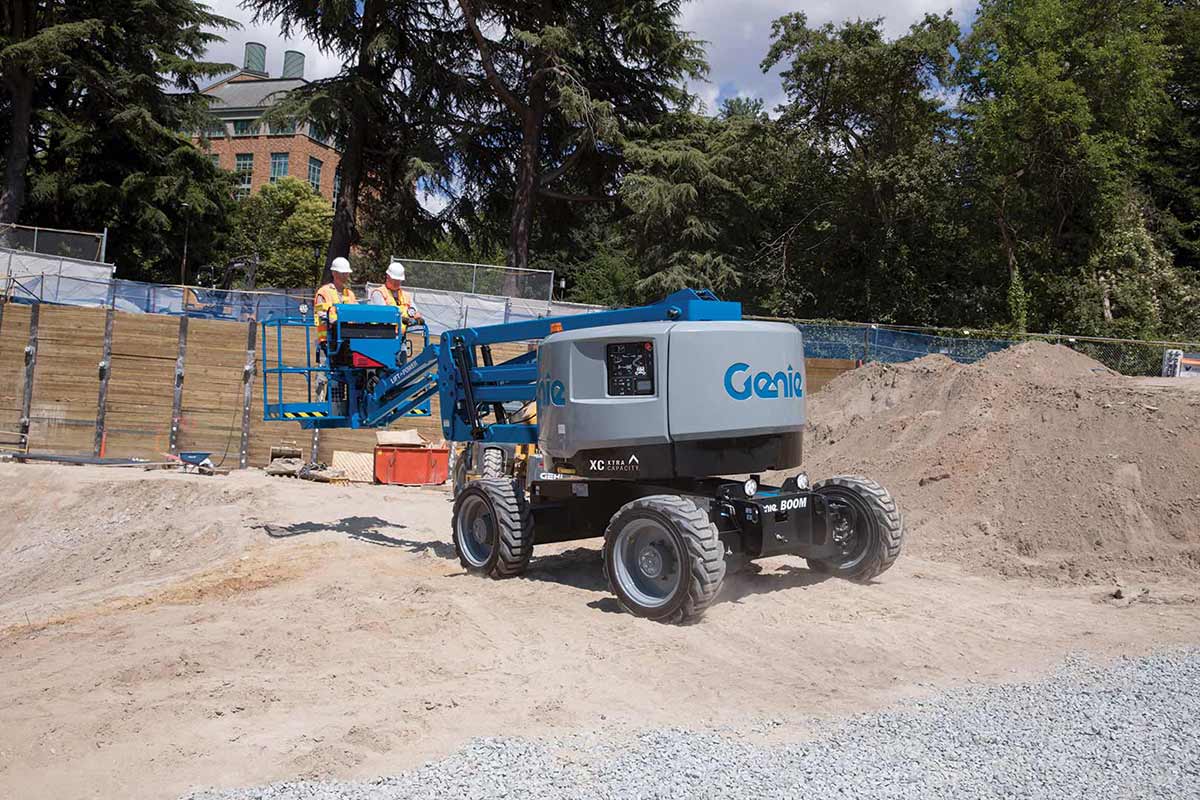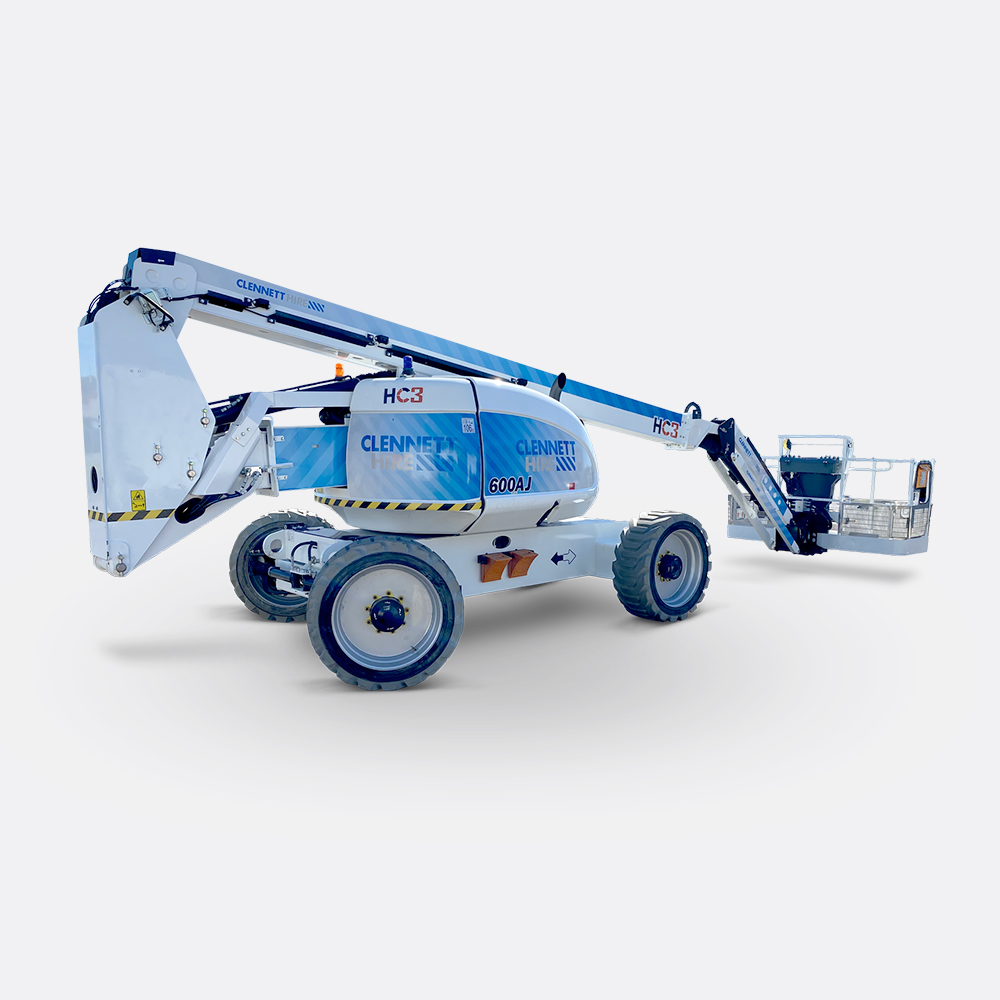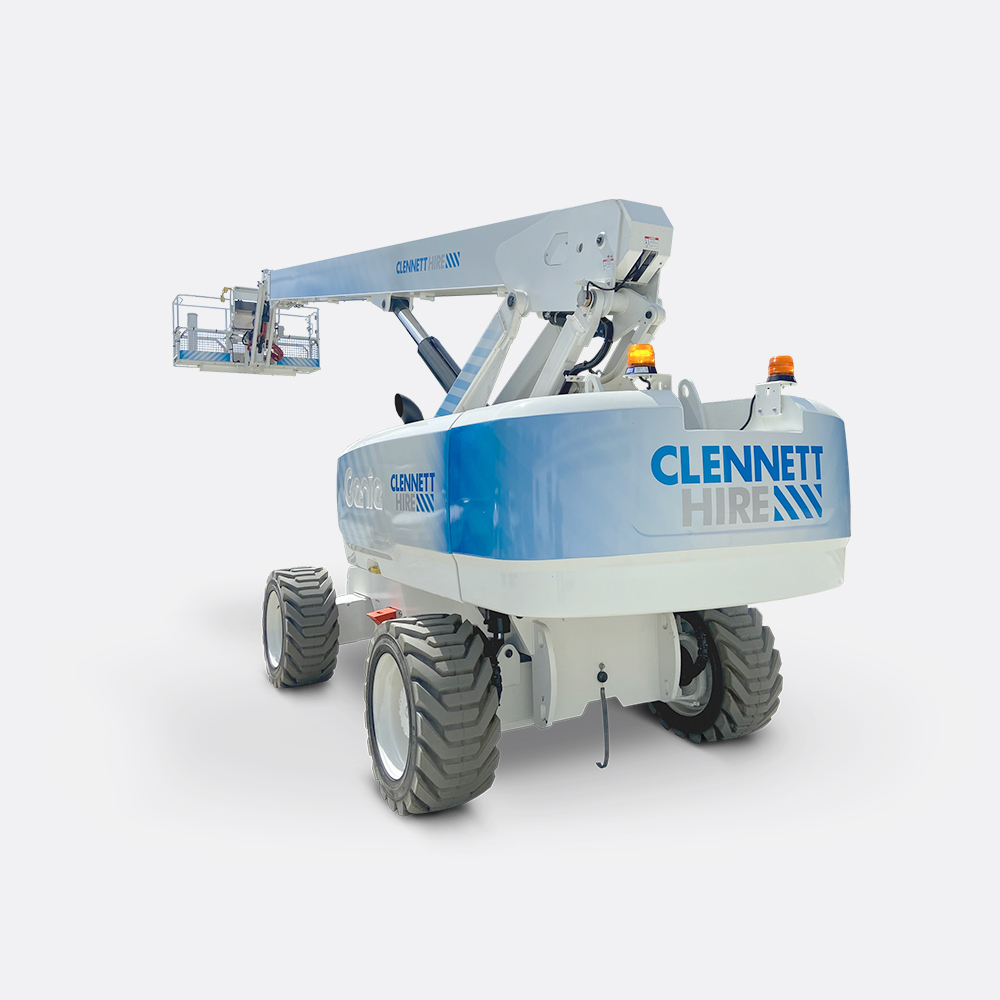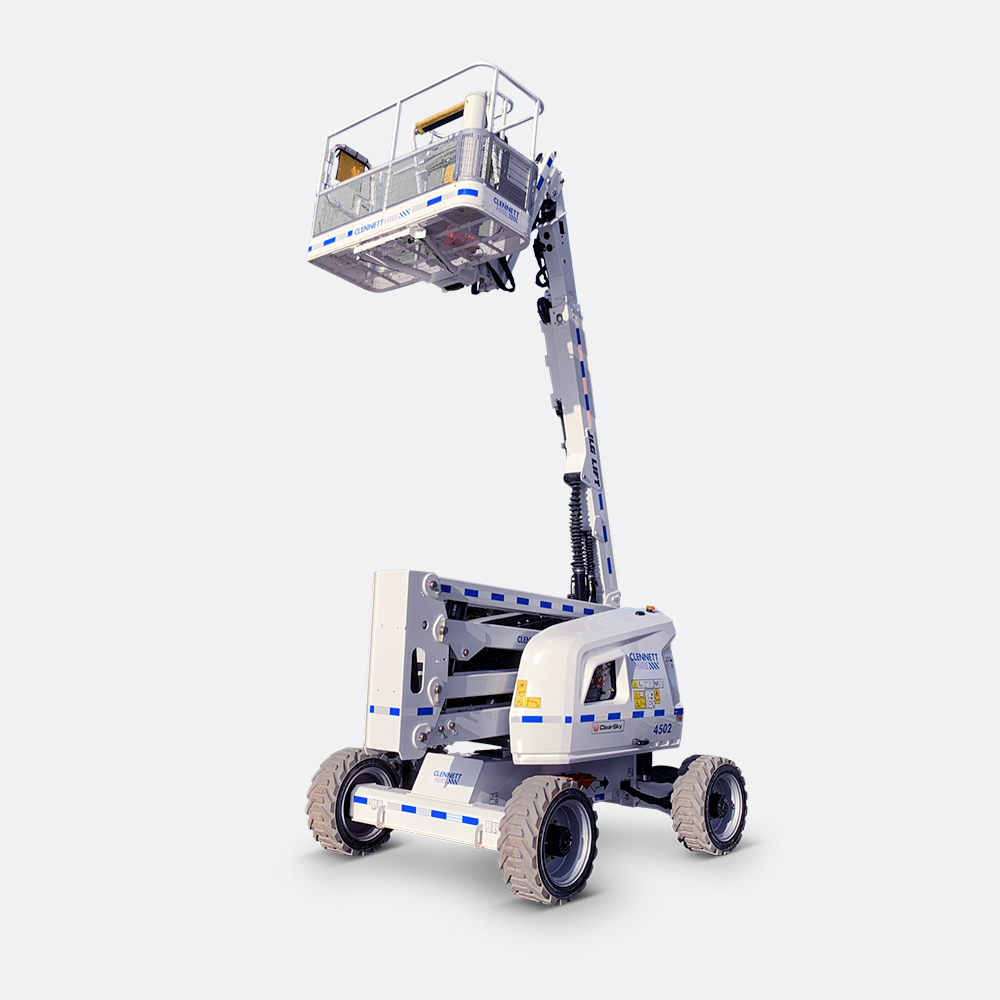
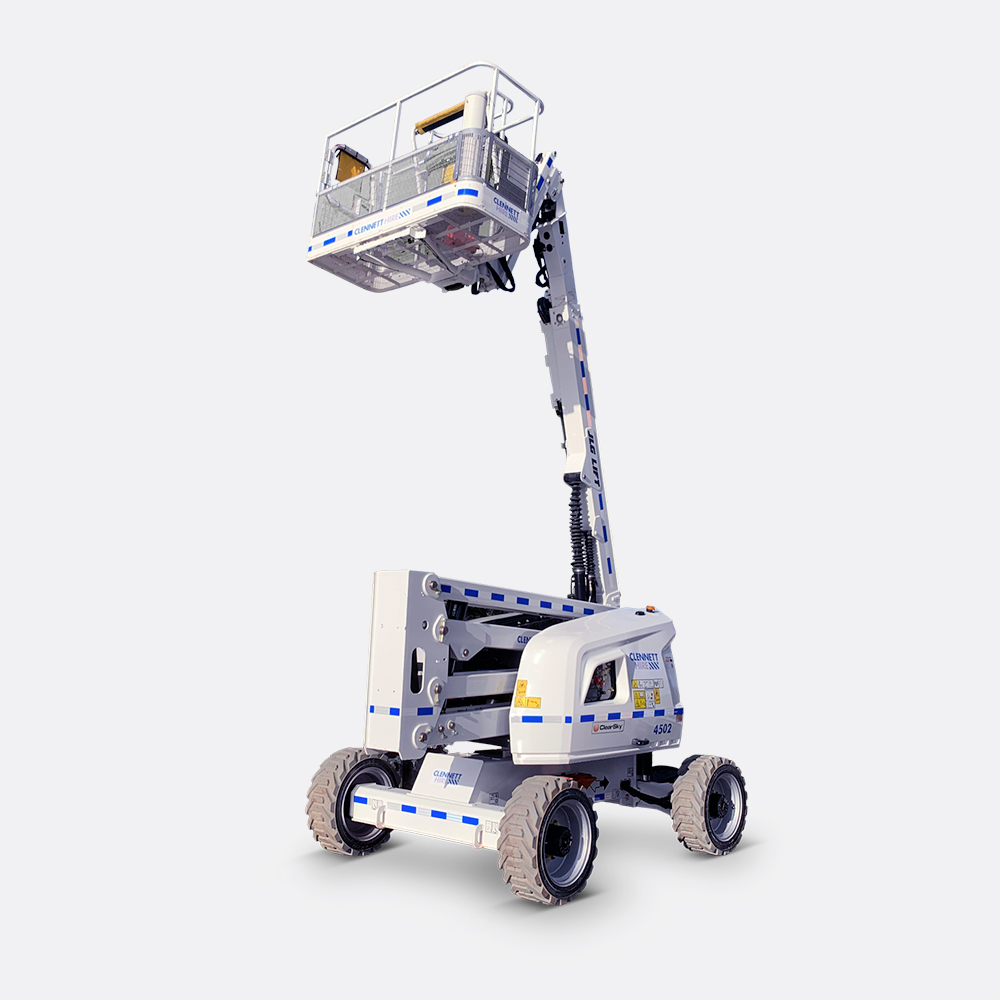
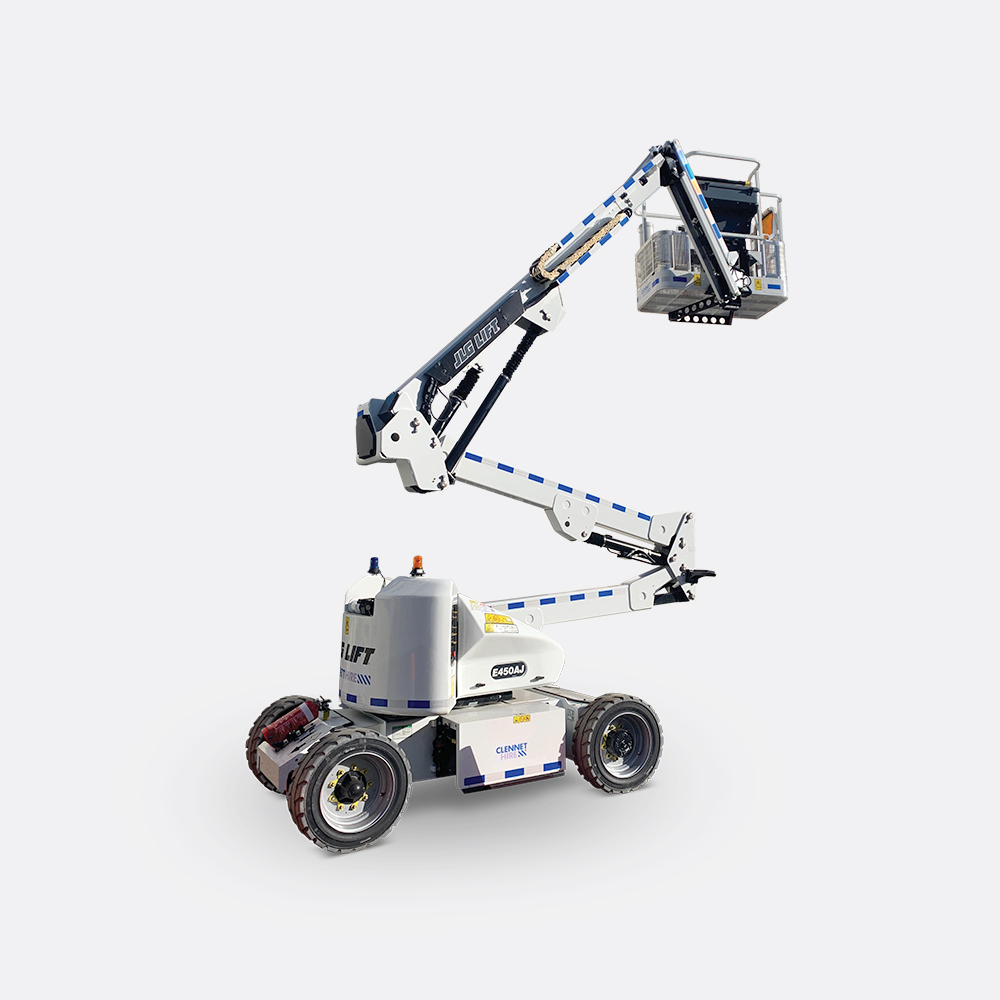
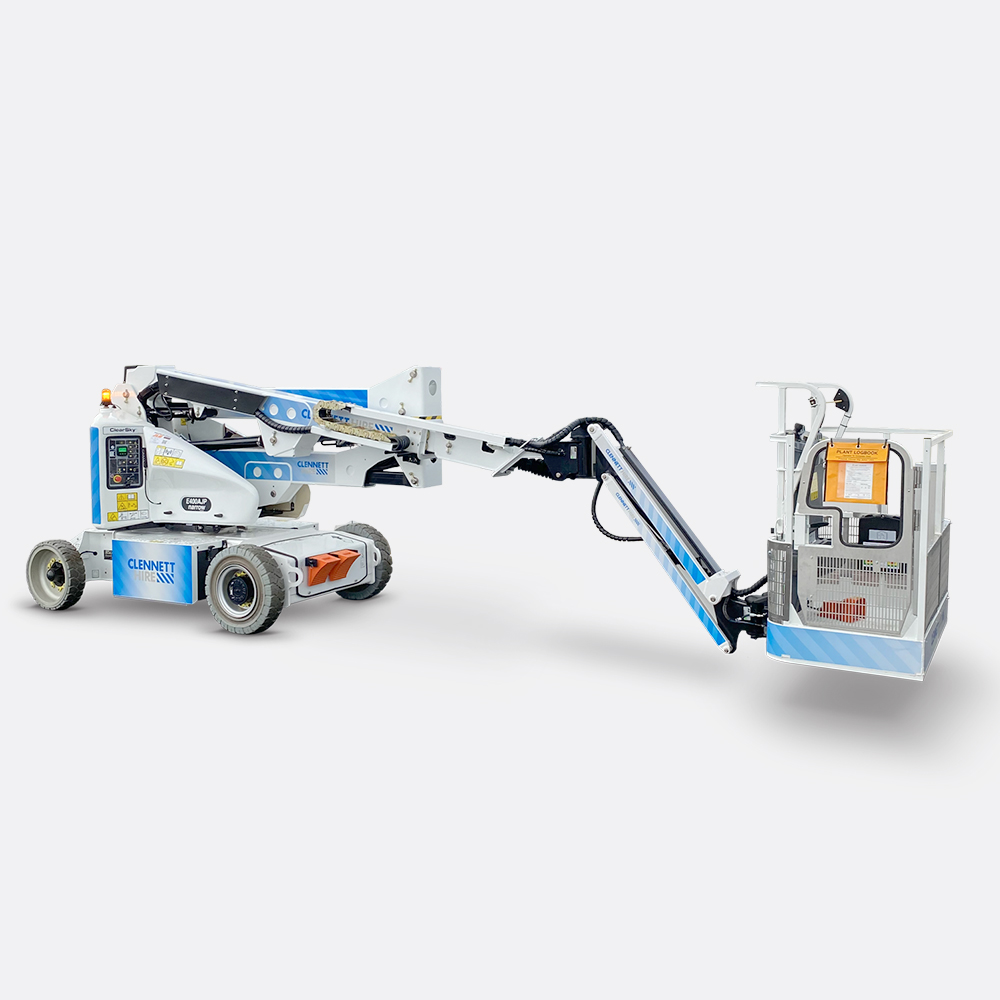
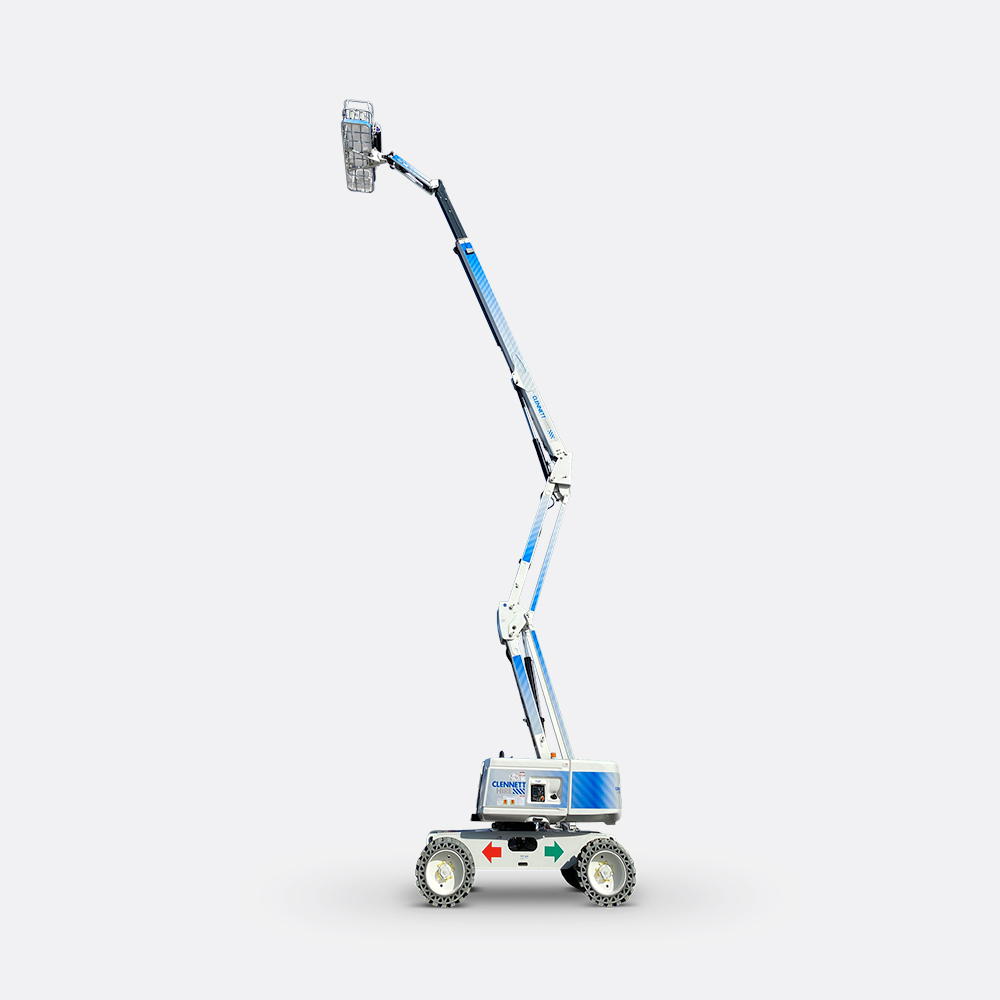
JLG 45HA Articulating Boom Lift
Forty-five feet of articulating reach. Work over, around, and behind obstacles.
45-ft articulating boom lift. 25 ft horizontal outreach, 500 lb capacity, dual-fuel (electric/gas), 4WD. JLG Boom Manager load monitoring. Indoor/outdoor versatile.
- 45 ft platform height (51 ft working height)
- 25 ft maximum horizontal outreach
- Articulating upper boom — reach over and behind obstacles
- 500 lb platform capacity (2 workers + tools)
- Dual-fuel: electric (indoor) / gasoline (outdoor)
- 4WD with oscillating axle for outdoor terrain
- JLG Boom Manager — real-time tip-over prevention
- 360° continuous turret rotation
✓ In Stock — Ships in 5-10 business days
Request a Quote
We respond within 24 hours — pricing, availability & shipping included
Quote Request Received
Thanks! We'll get back to you within 24 hours with pricing, availability, and shipping details for the JLG 45HA Articulating Boom Lift.
| Drive | 4WD, 12 ft/min travel speed |
| Model | 45HA |
| Power | Dual-fuel: electric / gasoline |
| Boom Type | Articulating (3-section + jib) |
| Manufacturer | JLG Industries |
| Platform Size | 30" × 60" (0.76 m × 1.52 m) |
| Certifications | ANSI/SAIA A92.5, CE EN 280, CSA B354.4 |
| Machine Weight | 16,550 lbs (7,507 kg) |
| Working Height | 51 ft (15.54 m) |
| Platform Height | 45 ft (13.72 m) |
| Turret Rotation | 360° continuous |
| Platform Capacity | 500 lbs (227 kg) |
| Horizontal Outreach | 25 ft (7.62 m) |
Multi-angle views of the JLG 45HA Articulating Boom Lift. Click any image to zoom.
Watch the JLG 45HA Articulating Boom Lift in action — full installation and operation demo.
⚙️ Load Moment Indicator (LMI)
Boom lifts monitor the combined load from occupants, tools, and dynamic forces as a moment (torque at the turret), not just weight. The LMI accounts for boom angle, extension, and basket position — halting all motion if the tip-over risk exceeds the rated stability threshold before the tipping point is reached.
🔒 Boom Envelope Control
The machine's control system automatically restricts which boom configurations are allowed while driving. Driving with a fully extended telescopic boom at height creates extreme tip-over risk — the system prevents this combination. Articulating booms have configuration-specific drive speed limits enforced by the controller.
🛡️ ANSI A92.5-Compliant Basket
Full-perimeter basket with mid-rail, full-height end rails, self-closing locking gate, and toe board meets ANSI/SAIA A92.5 requirements. A certified D-ring fall arrest anchor rated for 5,000 lbs is standard. Operators must wear a full-body harness with lanyard attached to the D-ring at all times while in the basket — OSHA 1926.453 requirement.
🚨 Dual Emergency Lowering Systems
A hydraulic emergency descent at the platform controls lowers the boom without engine power — a gravity-feed bypass valve independent of all electronics. A second emergency lower is located at the ground control station and can be operated by ground personnel to retrieve a stranded operator. Both systems are tested at pre-shift inspection.
How does this compare?
Articulating vs. telescopic boom: articulating lifts are the tool when you can't position the machine directly below the work — the knuckle joint lets you reach over a rooftop HVAC unit, around a building corner, or above a loading dock. Telescopic booms provide greater horizontal reach from a fixed machine position but lack the around-obstacle capability. For tree work, bridge inspection, telecom tower maintenance, and any work requiring 'up and over' positioning, articulating is the right choice. For maximum reach from a single position, telescopic wins.
No reviews yet
Be the first to share your experience with this product.
You Might Also Like