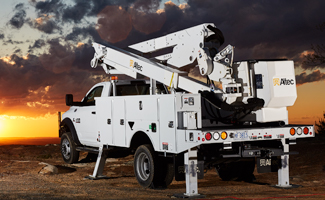
SkyCommand 45 Aerial Bucket Truck
Forty-five feet. One-man operation. Utility-grade reach from the street.
45-foot articulating aerial bucket truck boom. 500 lb bucket capacity, 30 ft horizontal reach, 360° rotation, PTO drive. Mounts on Class 4-6 truck chassis.
- 45 ft maximum vertical reach (working height to 51 ft)
- 30 ft maximum horizontal reach
- Telescoping + articulating two-boom system
- 500 lb bucket capacity — single-person rated
- 360° continuous basket rotation
- PTO-driven from truck engine — no generator required
- Hydraulic outrigger deployment from cab
- Emergency lowering system — manual override at base
✓ In Stock — Ships in 5-10 business days
Request a Quote
We respond within 24 hours — pricing, availability & shipping included
Quote Request Received
Thanks! We'll get back to you within 24 hours with pricing, availability, and shipping details for the SkyCommand 45 Aerial Bucket Truck.
| Warranty | 2 years hydraulic, 5 years structural |
| Boom Type | Telescoping + articulating (2-section) |
| Outriggers | Hydraulic, 4-point |
| Boom Weight | 4,200 lbs (boom assembly) |
| Power Source | Truck PTO (hydraulic) |
| Vertical Reach | 45 ft |
| Working Height | 51 ft |
| Basket Rotation | 360° continuous |
| Bucket Capacity | 500 lbs |
| Horizontal Reach | 30 ft |
| Mount Compatibility | Class 4, 5, or 6 truck chassis |
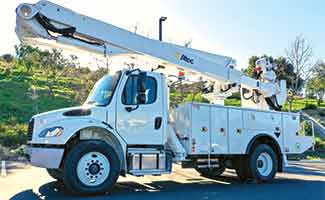
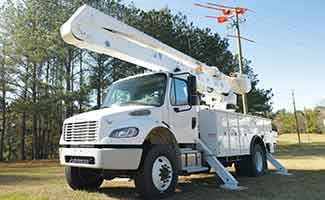
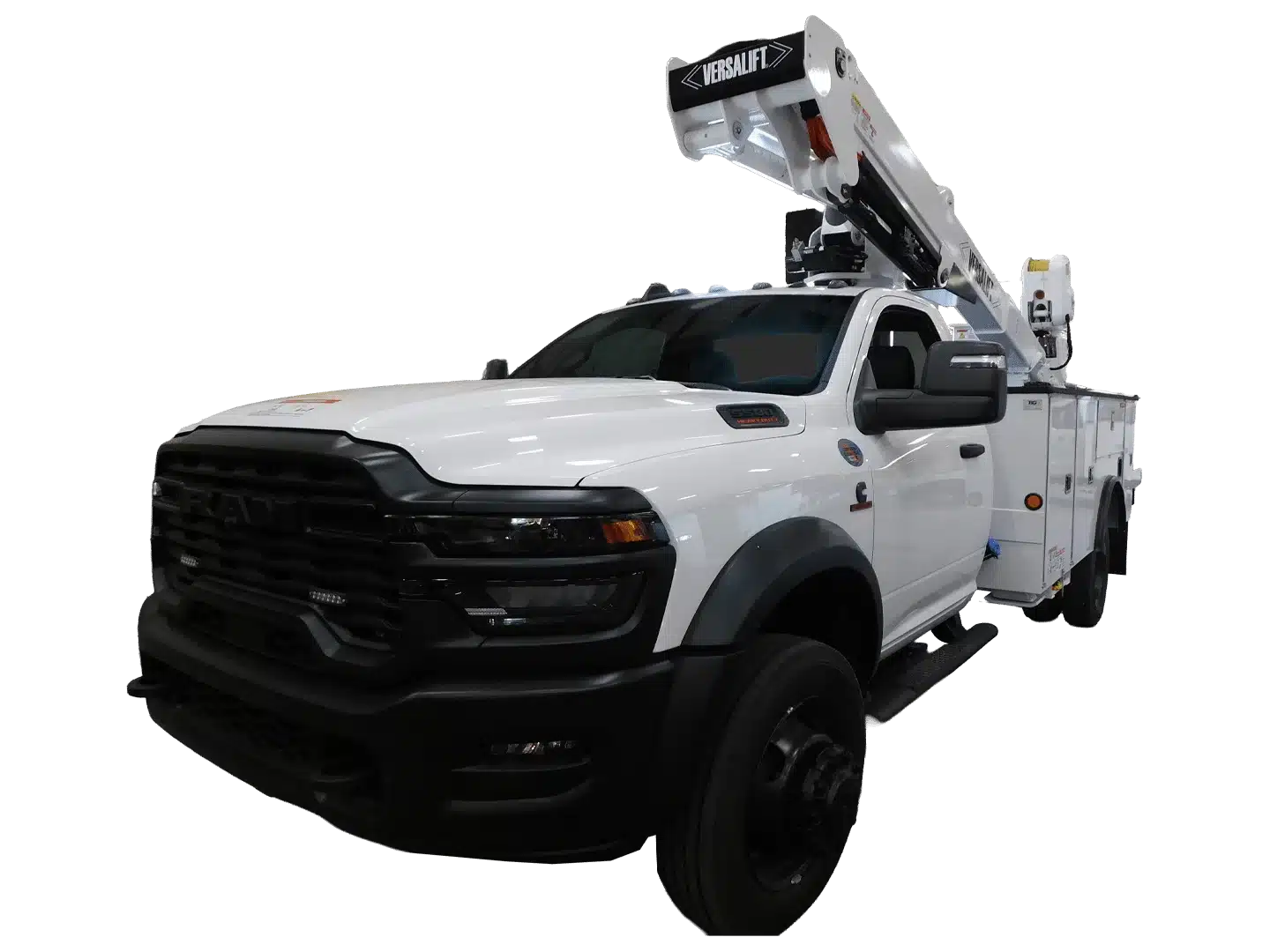
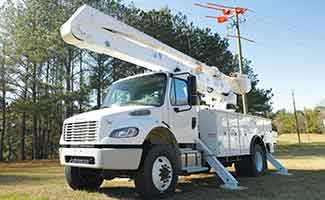
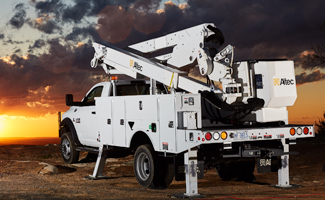
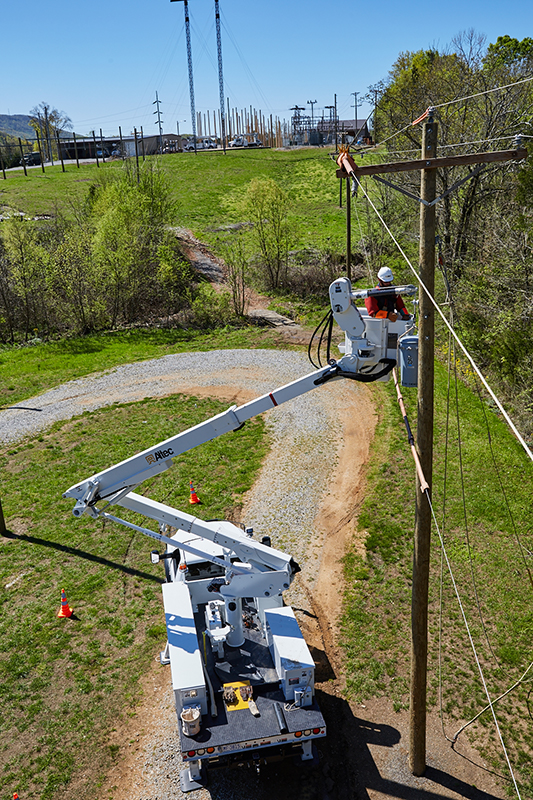
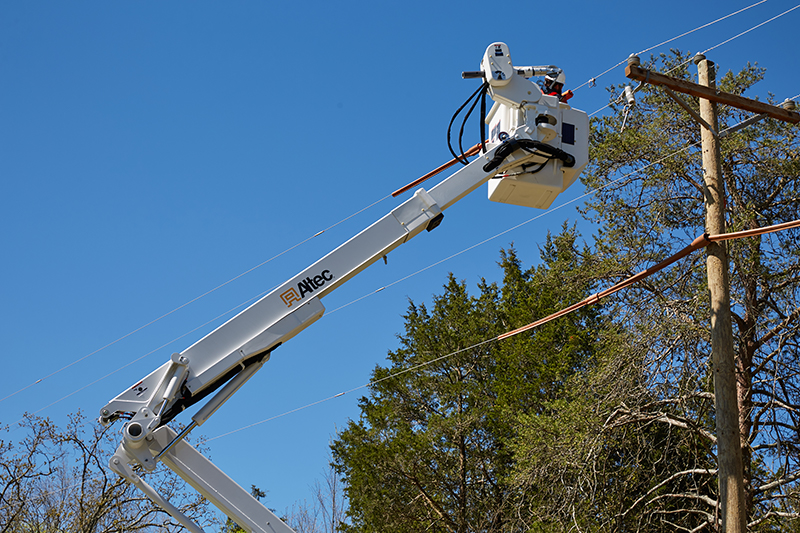
Multi-angle views of the SkyCommand 45 Aerial Bucket Truck. Click any image to zoom.
Watch the SkyCommand 45 Aerial Bucket Truck in action — full installation and operation demo.
Aerial bucket trucks use a truck-mounted hydraulic boom and articulating system to position a work bucket at height. The PTO-driven system draws power from the truck engine — boom operation requires the truck engine to be running.
PTO Engagement
Before operating the boom, engage the Power Take-Off (PTO) via the in-cab switch or lever. The PTO connects the truck's transmission output to the hydraulic pump. The truck must be in neutral (auto) or PTO gear (manual) before PTO engagement.
Outrigger Setup
Deploy all four outriggers before raising the boom. Place outrigger pads under each foot on soft or uneven ground. Confirm all four indicator lights show "set" (or physically verify leveling) before raising the boom above horizontal.
Boom Controls
Both platform (bucket) controls and base controls operate the boom. Platform controls replicate all boom functions with the addition of a platform rotation control. The base controls include an emergency override for all boom functions in the event of power loss in the bucket.
Emergency Lowering
A manual hydraulic override at the base of the boom lowers the platform in the event of engine failure or hydraulic system failure. The operator in the bucket should wear a full-body harness with a lanyard connected to the bucket's D-ring anchor at all times.
⚙️ Outrigger Interlock
The boom cannot be raised above horizontal unless all four outriggers show confirmed ground contact. An electronic sensor in each outrigger pad signals the control system. A boom raised without full outrigger deployment is the primary cause of tip-overs in aerial truck incidents.
🛡️ Insulation Testing (Class E)
Insulated bucket trucks require annual dielectric testing per ANSI/SIA A92.2. The fiberglass upper boom and bucket are tested to their full rated voltage (40 kV for Class E). A test port on the unit allows in-field testing without removing components.
🔒 Platform Fall Arrest Anchor
A certified D-ring fall arrest anchor is welded into the bucket structure. All operators in the bucket must wear a full-body harness with the lanyard connected to this anchor at all times — OSHA 1910.67 requirement for aerial devices.
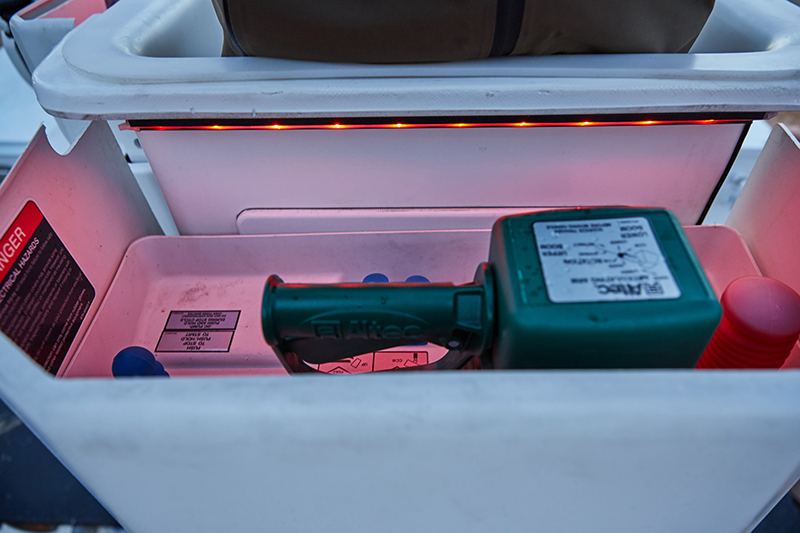
🚨 Emergency Lower / Override
A manual hydraulic override at the base of the boom lowers the platform to ground level independently of all electronic controls and truck power. Location and operation are marked clearly on the unit. Test this system at every pre-shift inspection.
How does this compare?
Bucket trucks are the workhorses of the utility, telecom, and municipal maintenance worlds for a reason — they combine transportation and elevated access in one unit. The 45-foot height class covers the majority of streetlight poles (typically 30-40 ft) and overhead utility work at safe distance from energized lines. The articulating upper boom is the key operational advantage: a non-articulating boom requires the truck to be positioned directly below the work point; articulating booms let you approach from the side, essential for roadside work where you can't stop directly beneath the target.
No reviews yet
Be the first to share your experience with this product.
You Might Also Like