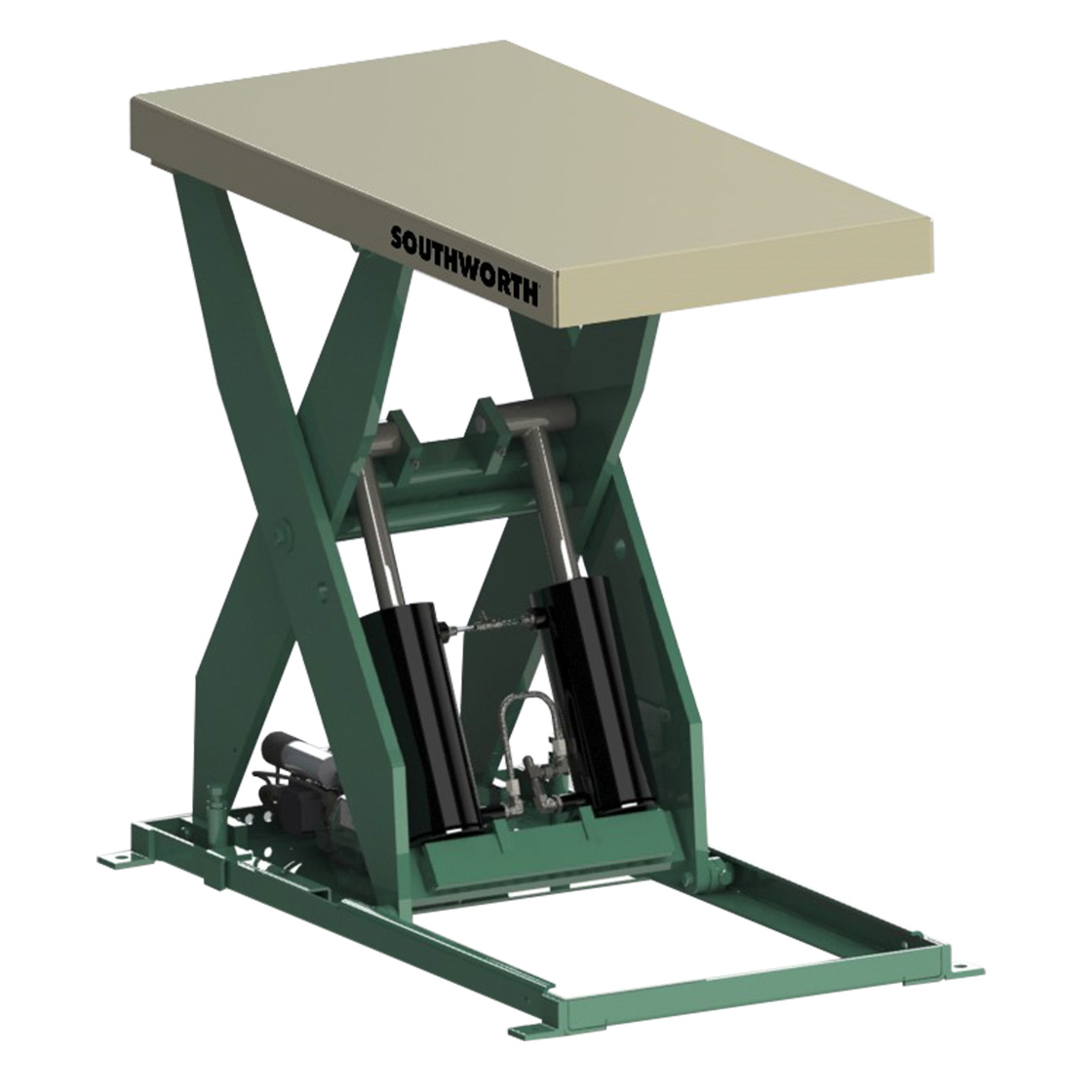
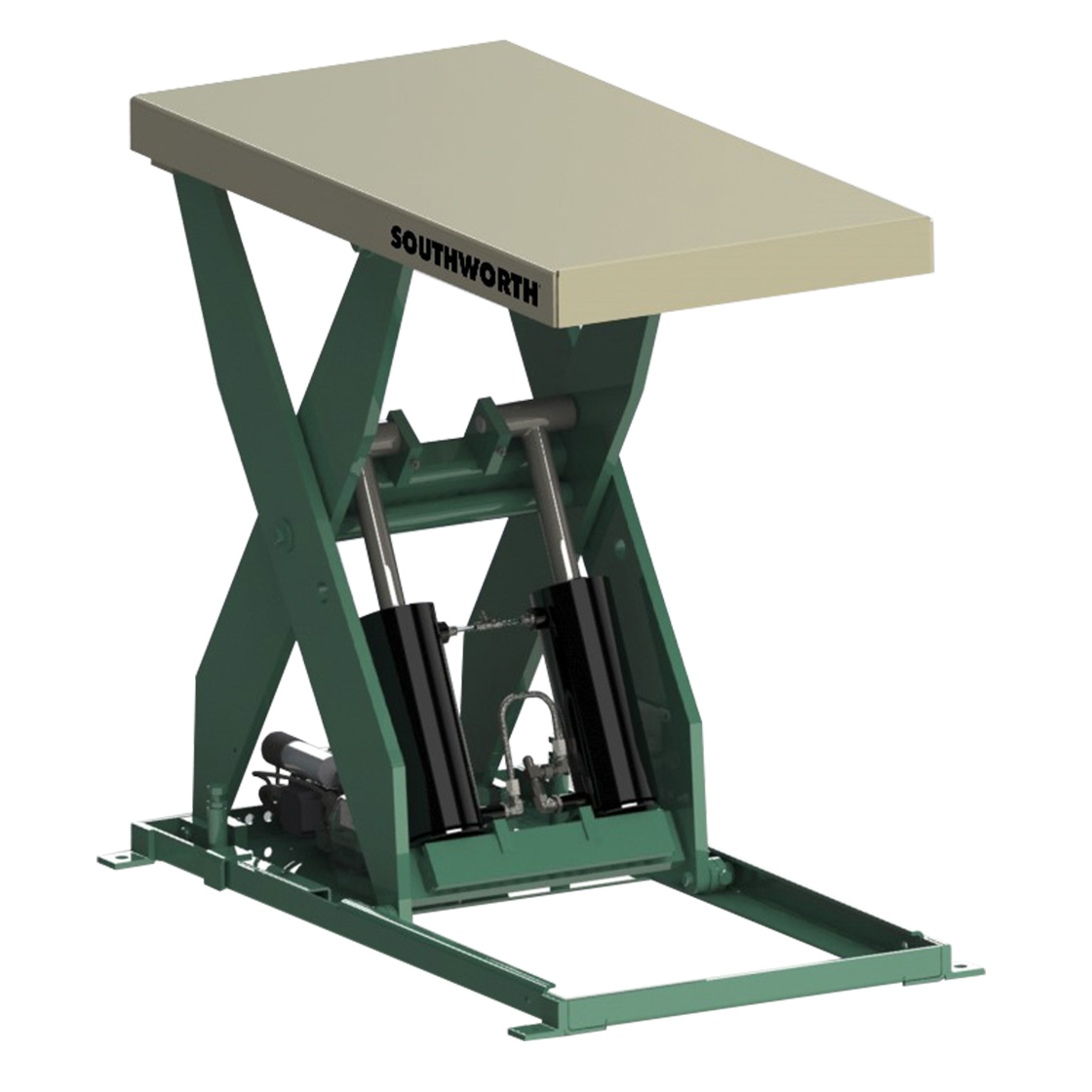
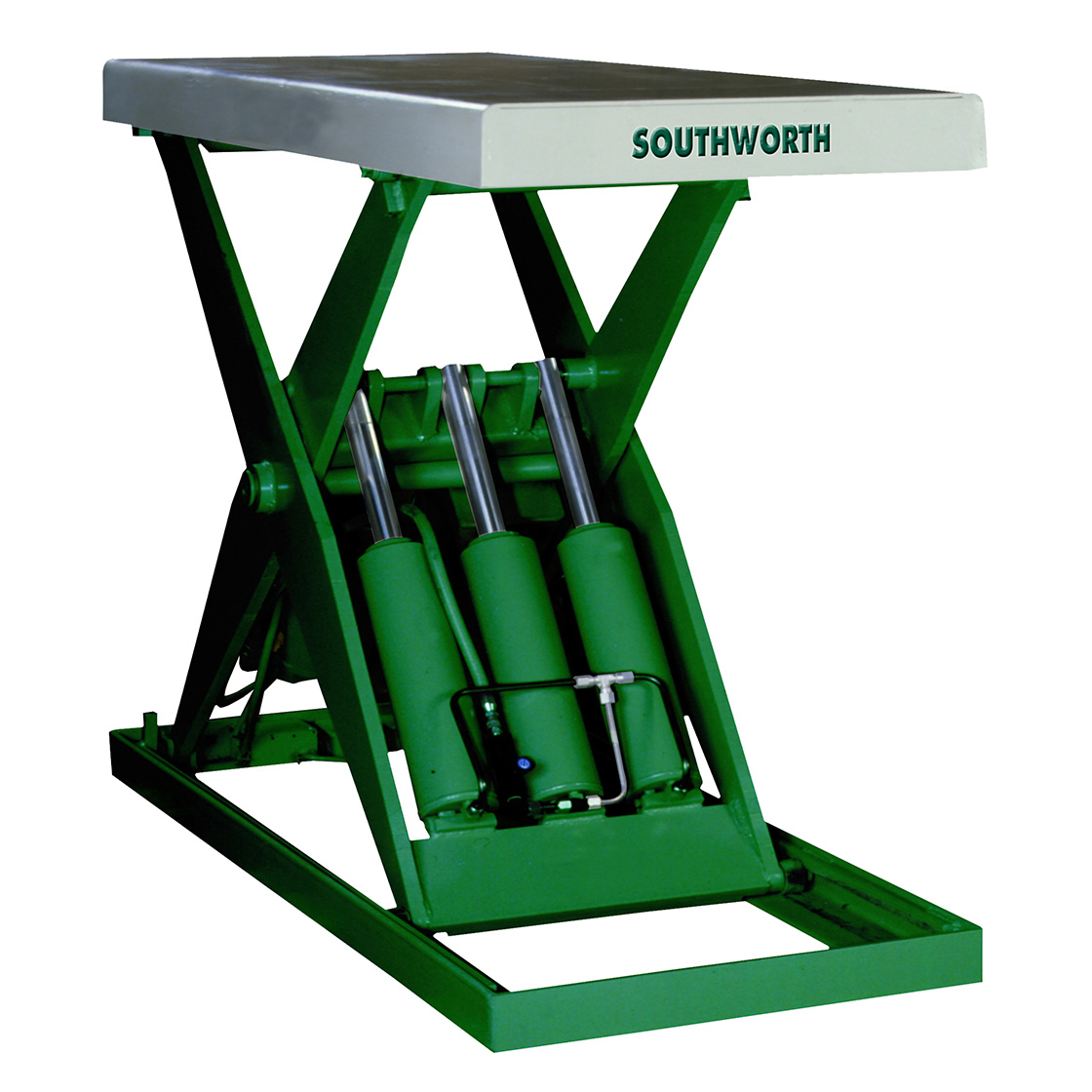
Southworth LS4 Lift Master 4,000 lb Industrial Lift Table
Heavy industrial. Four thousand pounds. Made in the USA for 100+ years.
4,000 lb USA-made industrial lift table. 36×48-inch platform, 8 to 36 inches height, electric push-button, precision level mechanism, 208-240V/3-phase. Lifetime frame warranty.
- 4,000 lb (2-ton) rated capacity
- 36" × 48" platform — full pallet size
- 8 to 36 inches height range — electric push-button control
- Hardened and ground pivot pins — platform level within 0.1°
- Internal counterbalance valve — holds under dynamic loading
- 208-240V / 3-phase motor
- Lifetime frame warranty — USA manufactured since 1890
- Optional maintenance prop for under-platform access
✓ In Stock — Ships in 5-10 business days
Request a Quote
We respond within 24 hours — pricing, availability & shipping included
Quote Request Received
Thanks! We'll get back to you within 24 hours with pricing, availability, and shipping details for the Southworth LS4 Lift Master 4,000 lb Industrial Lift Table.
| Model | LS4 Lift Master |
| Motor | 208-240V, 3-phase, 1.5 HP |
| Unit Weight | 1,100 lbs (499 kg) |
| Manufacturer | Southworth Products Corp. |
| Manufacturing | Portland, Maine, USA |
| Platform Size | 36" W × 48" L (0.91 m × 1.22 m) |
| Raised Height | 36 inches (914 mm) |
| Certifications | ANSI/ASME MH29.1, OSHA 1910.217 |
| Frame Warranty | Lifetime |
| Level Accuracy | ±0.1° across full travel |
| Lowered Height | 8 inches (203 mm) |
| Rated Capacity | 4,000 lbs (1,814 kg) |
| Hydraulic Valve | Internal counterbalance (dynamic load rated) |
| Vertical Travel | 28 inches (711 mm) |
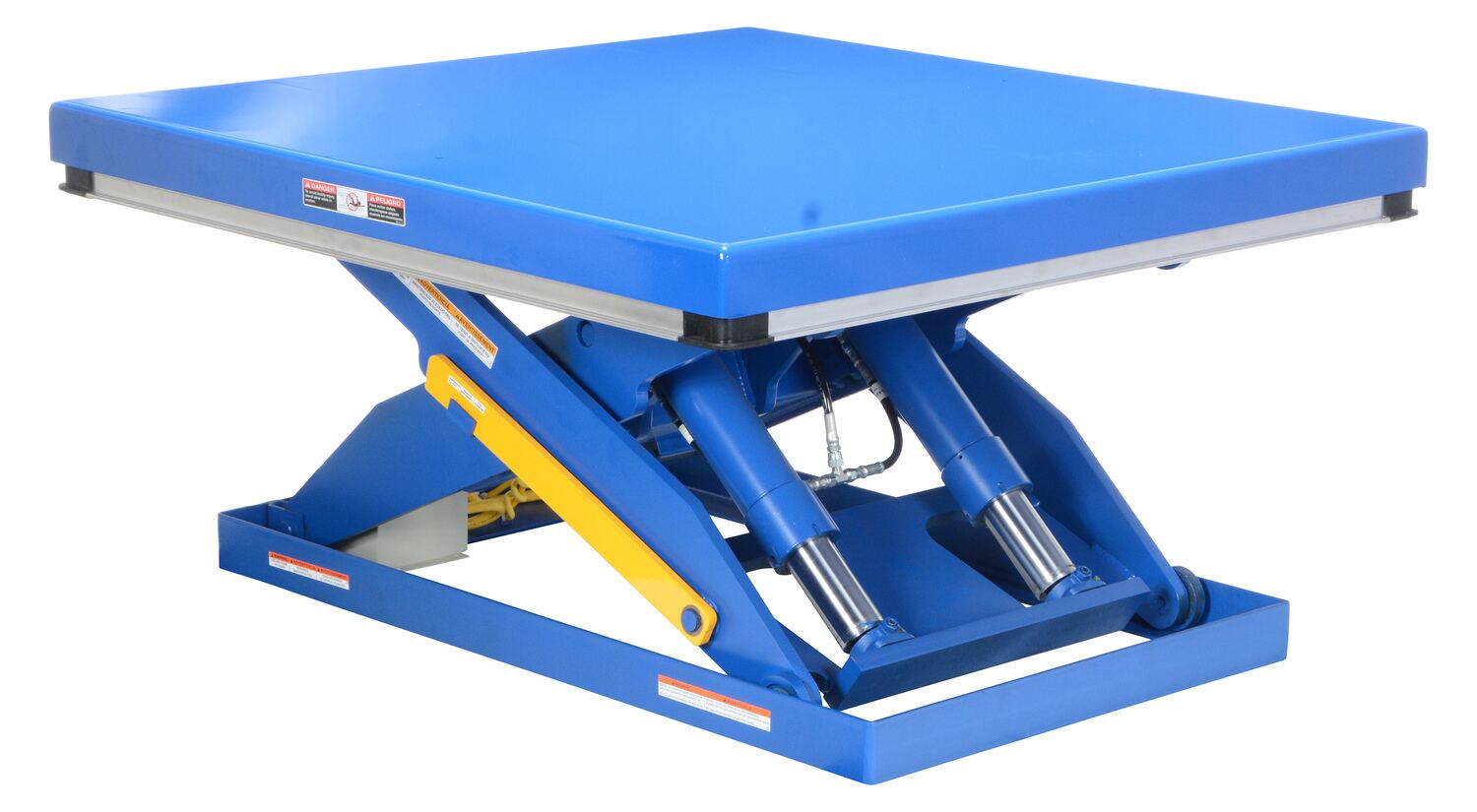
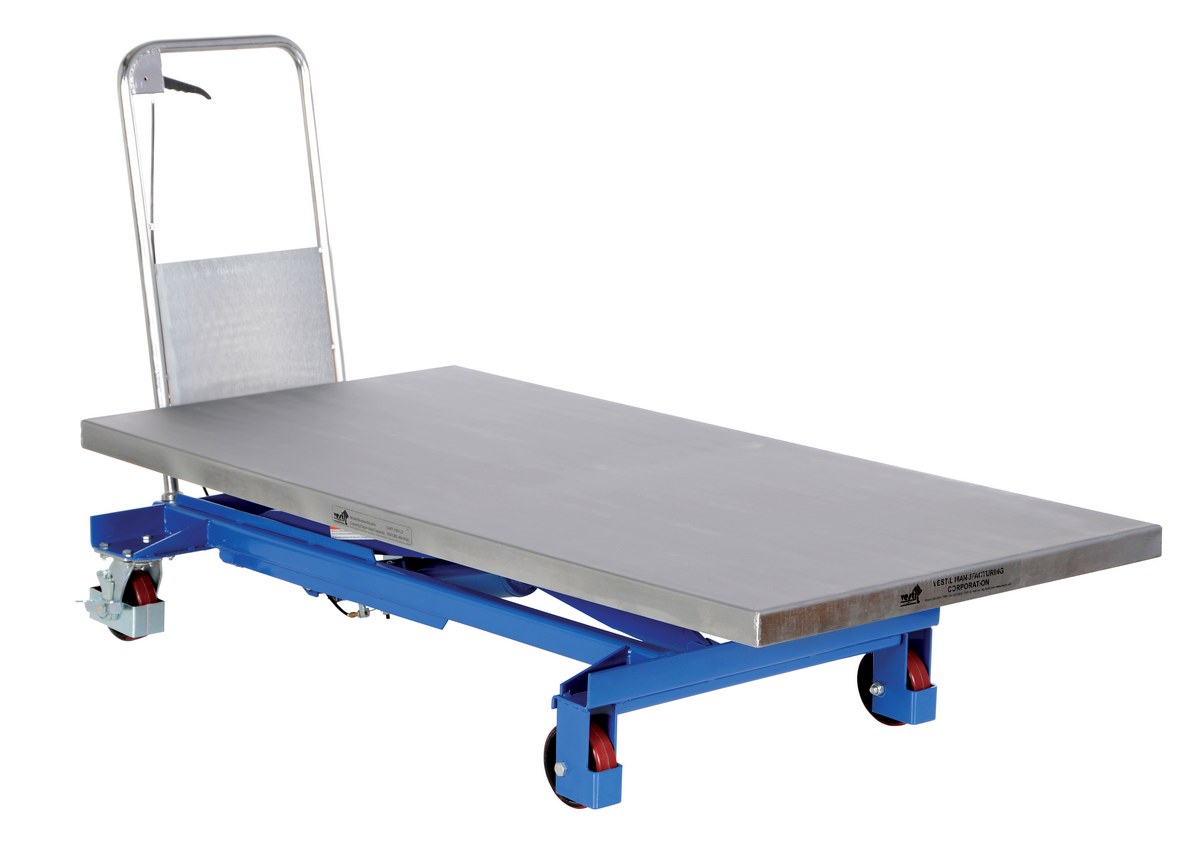
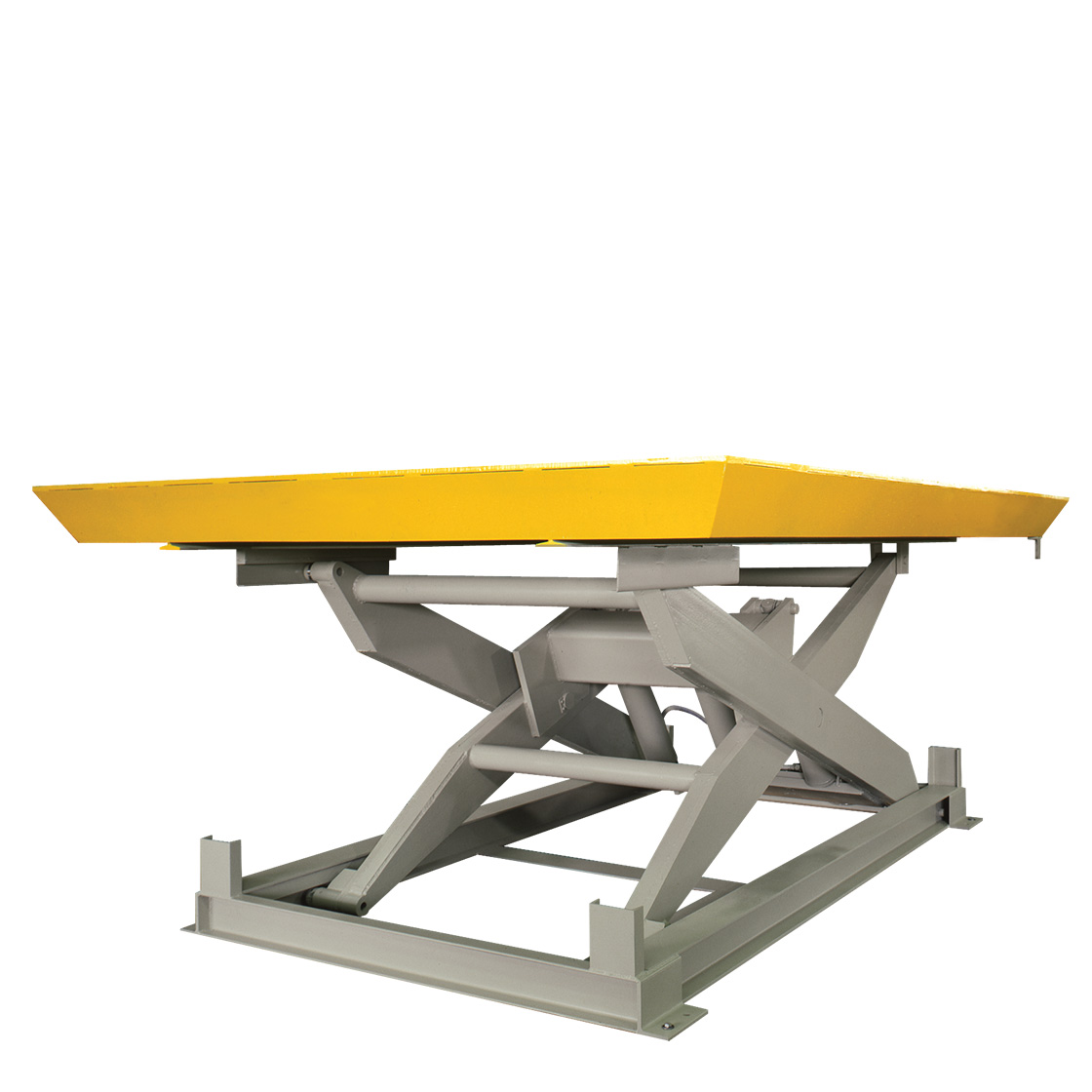
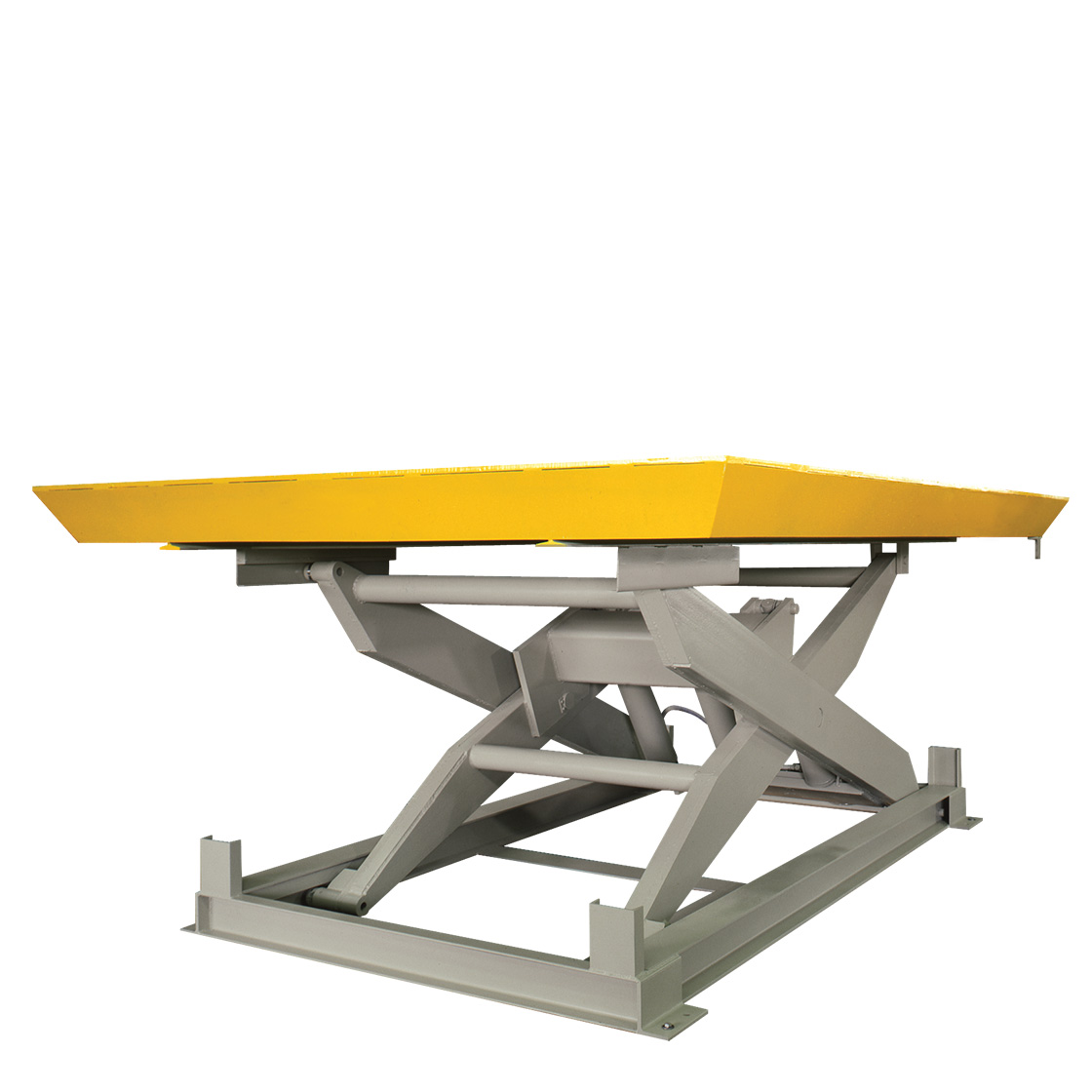
Multi-angle views of the Southworth LS4 Lift Master 4,000 lb Industrial Lift Table. Click any image to zoom.
Watch the Southworth LS4 Lift Master 4,000 lb Industrial Lift Table in action — full installation and operation demo.
Hydraulic lift tables use a scissor mechanism powered by electric or manual hydraulics to raise a work platform to ergonomic working height. Electric models use push-button controls; manual models use a foot-pedal pump. Both types hold height via a self-locking internal valve.
🔌 Power & Control
Electric models: plug into the rated power supply (110V single-phase or 208-240V 3-phase as specified). Press and hold the "Up" button to raise; press "Down" to lower at controlled speed. Manual models: pump the foot pedal to raise, rotate the release valve to lower.
📐 Height Setting
For ergonomic workstations, set the platform height so the work surface is at elbow height when standing with arms relaxed at sides. This is the NIOSH-recommended working height for minimizing back and shoulder strain. For seated work, set the platform 1–2 inches above the seated elbow height.
🔒 Self-Locking Valve
The internal counterbalance valve holds the platform at any set height even if power is lost. The platform will not creep down under static load. To lower, you must actively press the lower button (electric) or open the release valve (manual) — there is no gravity-descent bypass.
⚠️ Safety Toe Guard
On units with safety toe guards: the platform stops descending immediately if the toe guard contacts an obstruction. Clear the area under the platform before lowering. Regularly inspect the toe guard switch/bar to confirm it's functioning — test it monthly by placing a soft object under the platform and pressing lower.
⚙️ ANSI/ASME MH29.1 Standard
Industrial lift tables must meet ANSI/ASME MH29.1 (Safety Standard for Low Lift and High Lift Trucks) or the equivalent lift table standard. This covers load ratings, hydraulic system safety factors, platform stability, and toe guard requirements. Compliance is mandatory for OSHA-regulated workplaces.
🔒 Self-Locking Counterbalance Valve
The internal counterbalance valve prevents platform descent under static load even if the hydraulic pump or power fails. This is a critical safety device — verify it is present and functional by raising the table, shutting off power, and confirming the platform holds position. A table that creeps down when power is off has a failed valve and must be taken out of service.
🛡️ Safety Toe Guard
OSHA 29 CFR 1910.212 requires mechanical safeguarding to prevent workers from placing extremities under descending pinch points. The safety toe guard — a spring-loaded bar around the platform perimeter — automatically stops descent when it contacts an obstruction. Test monthly. If the toe guard does not stop the table when activated, the safety circuit must be repaired before the table is returned to service.
📐 OSHA Ergonomic Compliance
OSHA's ergonomics guidelines (1990 proposed standard and the NIOSH lifting equation) recommend adjustable workstation height as the primary intervention for reducing musculoskeletal injuries from fixed-height work. Lift tables used as ergonomic workstations should be periodically adjusted to each operator's elbow height — this is the OSHA-recommended measurement for standing work surface height.
How does this compare?
Southworth LS4 vs. imported alternatives at 4,000 lbs: the 0.1-degree platform level accuracy is the spec that matters for precision assembly — automotive body panels, aerospace components, and die-press loading all require a flat, level work surface. Imported lift tables at this price range typically specify ±0.5° — five times less accurate. The lifetime frame warranty reflects the structural confidence Southworth has in the LS4's construction. For applications requiring higher capacities (6,000–20,000 lbs), Southworth offers the LS series up through the LS20 at 20,000 lbs.
No reviews yet
Be the first to share your experience with this product.
You Might Also Like